
Reviewed · 2-HOUR EXPERIENCES
Best Intro to Zurich in 2 hours with a Local
Zürich reveals itself quickly on foot, and this two-hour walk gives you a useful first look at the city’s old town, river, churches, and hilltop views. You’ll visit Lindenhof and Grossmünster, then ride a funicular toward the heights above the center. It is a brisk orientation rather than a museum-length lesson.
I like the small group of up to eight, which makes it easier to ask questions and set a comfortable pace. I also like the mix of famous sights and quieter corners, plus the local product tasting and personal suggestions for places to eat or explore later. The main concern is price: at $173.58 per person, you should expect a polished personal introduction, not simply a walk with light commentary.
Key points at a glance
- A compact route through central Zürich: See Lindenhof, Grossmünster, old town lanes, a Renaissance civic building, and high city views in about two hours.
- A genuinely small group: The maximum is eight people, allowing the route to respond to your interests and walking pace.
- A funicular ride adds variety: One uphill ride is included, though other public transport, museum, and monument tickets are not.
- Guide quality matters here: Ana received warm praise for her historical knowledge, conversation, and restaurant recommendations, but guide assignments can vary.
- Good for your first or second day: You get orientation and practical ideas you can use for the rest of your stay.
- Not ideal for limited mobility: The walking route and uphill portion are not recommended if you have impaired mobility.
A sensible first look at Zürich
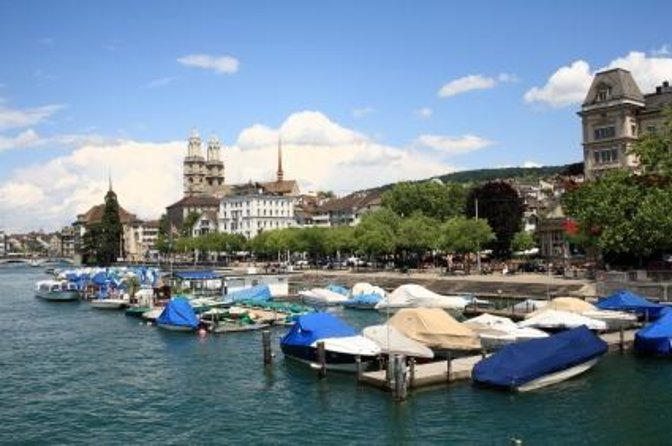
Zürich can feel compact at first, but the city has several layers packed close together. The Limmat River cuts through the center, old guild houses and churches fill the historic core, and the hills rise sharply behind it. In two hours, this walk gives you a basic map in your head.
The route begins at Limmatquai 55, beside the river in the center of town. That location is practical. You are starting near the old town and close to some of Zürich’s most recognizable sights, rather than spending the first part of the tour getting to the city center.
The guide is an independent local, not a large coach-tour narrator. That distinction matters. The group limit of eight gives the walk a more conversational feel, and the route can adjust to your interests and pace. You can ask about food, neighborhoods, city life, or what to do next instead of listening to a fixed script from several paces away.
The two-hour length is also useful. It is short enough to fit into a busy arrival day, but long enough to cover both the main old town and a higher viewpoint. You should not expect every fact about Zürich in this time. Think of it as a strong first orientation, with enough context to help you decide where to spend the rest of your visit.
A few more Zurich trips worth comparing
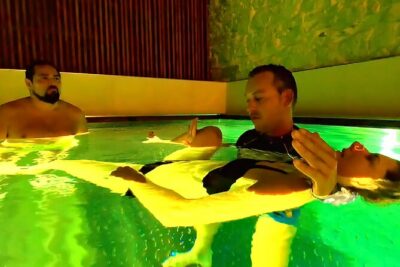
- 2 Hour Floating Harmony Couples Course
★ 5.0 · 3 reviews - Geneva Highlights 2-Hour Introductory Tour
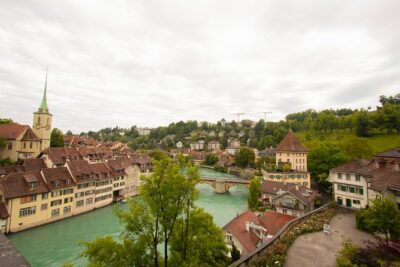
★ 4.0 · 322 reviews - Best Intro to Bern in 2 hours with a Local
★ 4.5 · 20 reviews
Lindenhof, where Zürich looks back to Roman times
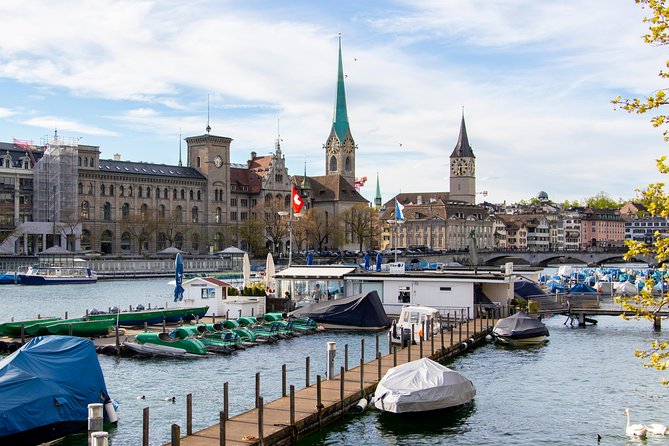
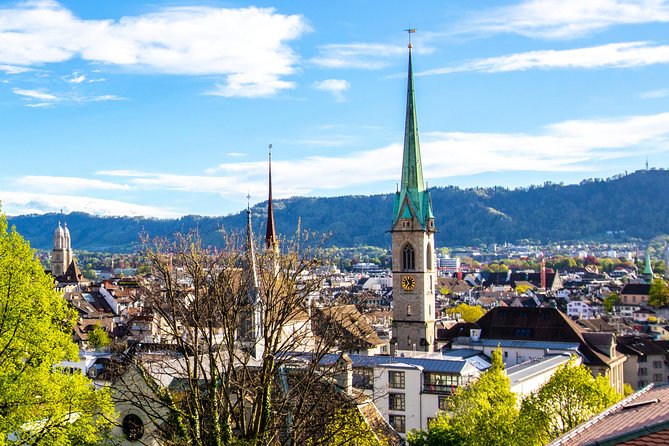
One of the first important stops is Lindenhof, a peaceful hilltop park above the river. The setting is calmer than the busy streets below, and the open views help you understand how Zürich is arranged.
Lindenhof also connects the present city with its Roman past. The hill’s history gives the guide a natural starting point for explaining why this central site has mattered for so long. You get a sense of Zürich as a place shaped by the river, trade, defense, and civic life.
The main value here is orientation. From above, you can look across the river toward the old town and begin to place the churches, lanes, and hills in relation to one another. If you arrive in Zürich without a clear idea of how its center fits together, this stop helps.
The drawback is that Lindenhof is not a long visit. The tour does not provide enough time for a detailed archaeological lesson, and the park itself may be quiet rather than packed with formal attractions. Its appeal is the view and the setting, not a long list of things to enter.
Grossmünster and the riverfront skyline
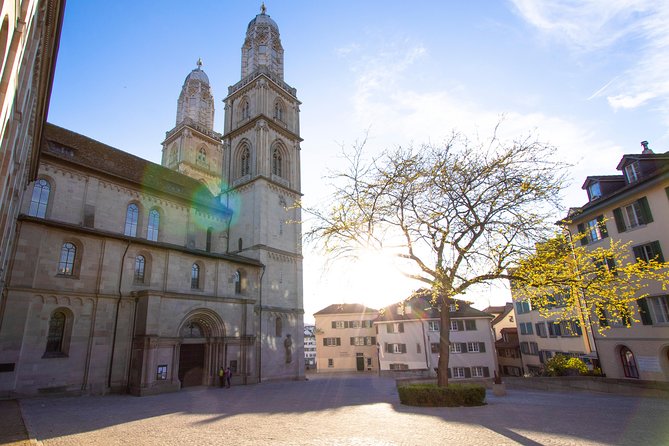
The walk continues to Grossmünster, the church with twin towers that dominates many views of central Zürich. Its silhouette is one of the city’s defining features, and the church gives the guide an easy way to explain Zürich’s religious and political past.
Grossmünster is closely tied to the Reformation in Zürich. That connection adds substance to what might otherwise be a quick photo stop. You can see how the church’s position beside the river helped shape the city’s identity and skyline.
The route focuses on seeing the building from the outside. Entry tickets for monuments are not included, so you should not assume that the walk includes an interior visit. If you want to explore churches or museums inside, plan that for another time and budget for any admission costs.
I like the way this stop balances architecture with city history. You are not only looking at twin towers. You are also standing in the part of Zürich where religion, civic power, and public life have overlapped for centuries.
Old town lanes with a slower pace
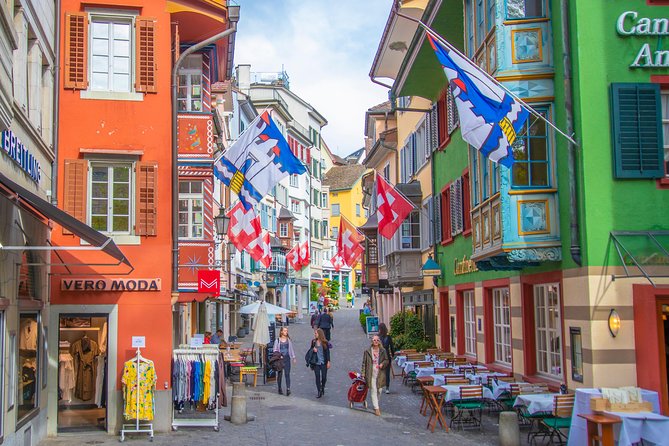
From the grand church and riverfront, the walk turns toward smaller old town streets. One stop features a charming lane lined with pastel shutters and fluttering flags. This is the sort of scene that makes Zürich’s historic center feel personal rather than monumental.
The preserved façades are easy to appreciate on foot. The lane gives you a chance to notice details that disappear when you are rushing between headline sights: painted shutters, narrow building fronts, flags, and the close rhythm of the street.
This is also where the small group format pays off. In a group of eight or fewer, you can stop without blocking a large crowd, and you have a better chance of hearing the guide in a narrow street. The pace can shift if you want more time for photographs or have questions about the neighborhood.
Do not expect this part to feel like a grand set-piece. Its pleasure is modest and visual. You are seeing how Zürich’s historic center is lived in and maintained, rather than entering a major attraction with a formal presentation.
Same base, a completely different kind of day:
- Mount Titlis and Lucerne Day Trip from Zurich
★ 4.5 · 1,960 reviews - Heidiland and Liechtenstein Tour from Zurich
★ 4.0 · 1,745 reviews - Jungfraujoch: Top of Europe Day Trip from Zurich
★ 4.5 · 1,647 reviews - Jungfraujoch Day Trip from Zurich: Swiss Alps & Bernese Oberland
★ 4.5 · 1,409 reviews
A Renaissance civic building beside the Limmat

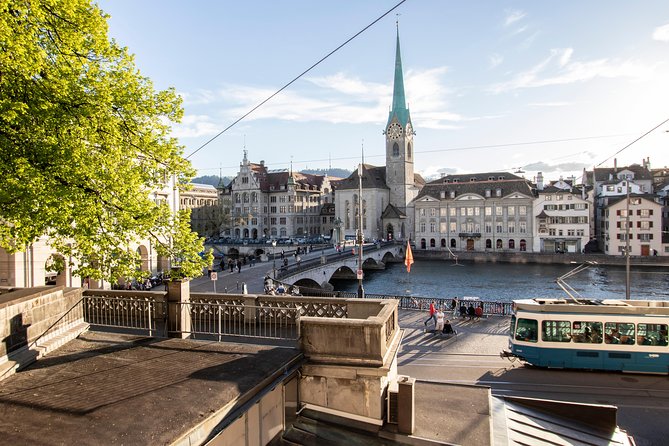
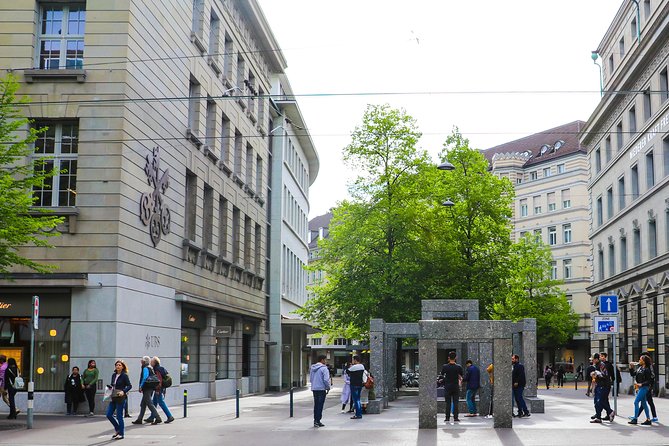
Another stop brings you to a Renaissance façade beside the river. This is the city’s civic face, with architecture that reflects Zürich’s pride in its government and public institutions.
The riverside position helps tie the building to the rest of the route. You have already seen the church towers and old town lanes. Here, the focus shifts from religious power to civic identity. The guide can connect the elegant façade with the city’s long tradition of local government and public life.
The stop works best as part of the larger sequence. On its own, a Renaissance exterior might take only a few minutes to appreciate. Together with Lindenhof and Grossmünster, it shows three different sides of central Zürich: its Roman past, religious history, and civic character.
The tour does not include monument entry, so again, the emphasis is on the outside view and explanation. If you want a longer architectural visit, you would need to return independently.
The funicular ride to Zürich’s higher views
The funicular is the route’s change of pace. Instead of walking every uphill stretch, you take one included ride toward the higher part of the city. This is a practical feature, not just a novelty. Zürich’s central hills offer excellent views, but the climb can make a short tour feel tiring.
At the top, sweeping views open across the city and toward the mountains. The setting also brings out another side of Zürich, one linked with its academic life and hillside institutions. The city below looks orderly and compact, while the wider view shows how quickly urban streets give way to open country.
The funicular ticket specified for the program is included, but other public transportation costs are not. The wording matters if you plan to continue using buses, trams, or trains after the walk. You should also remember that weather can change the route or reduce the quality of the views.
This is one of the strongest parts of the walk for first-time visitors. A street-level tour can show you beautiful buildings, but a high viewpoint tells you how Zürich sits in its surroundings. You get a better sense of the relationship between the river, city center, hills, and distant mountains.
A local tasting, with some flexibility
The tour includes a local product tasting. The exact item can vary with the season, availability, and group preferences, so you should not book this expecting one specific Swiss food.
That flexibility can be useful. A small group may have different tastes, and seasonal availability can affect what the guide can offer. It also keeps the tasting from becoming a fixed commercial stop.
Still, keep your expectations measured. This is a sample, not a meal, and personal expenses are not included. If you are hungry, plan to eat separately before or after the walk.
The tasting adds a small sensory touch to a route otherwise centered on buildings and views. It gives you something local to try while keeping the main focus on Zürich itself.
The value of a guide who gives practical advice
The most useful guide will do more than point out façades. You want someone who can explain why the city developed as it did, answer basic questions, and suggest what to do next.
Ana has received especially warm praise for making the walk interesting through Zürich’s history and for offering restaurant suggestions. One useful tip is to schedule this tour on your first or second day, rather than saving it for your final day. That gives you time to act on the recommendations.
Another positive feature is the conversational feel. The walk can feel like exploring with a local friend, which suits people who prefer questions and discussion to a formal lecture. That style also means the experience may differ from one guide to another.
There is a clear trade-off. One participant found the orientation useful but felt the historical explanation was too light for the price. If you want a detailed academic account of Zürich’s past, this may not satisfy you. If you want a friendly introduction and practical direction, the format makes more sense.
Is $173.58 a fair price?
At $173.58 per person, this is an expensive two-hour walk. The price is easier to justify if you value a maximum group size of eight, a flexible route, a local guide, a funicular ride, and advice tailored to your interests.
It is harder to justify if you are mainly paying for sightseeing stops you could reach on your own. Lindenhof, Grossmünster, the old town, and the riverfront are all central places, and a self-guided walk can cover the same broad area at little cost.
The difference is interpretation and convenience. A good guide saves you planning time, explains the connections between places, and gives you personal suggestions for the rest of your stay. That value depends heavily on the individual guide and on how actively you take part.
The price also deserves extra attention because one poor booking experience involved confusion over the type of tour being purchased. This is a walking tour, not a car tour. Confirm that point before booking, especially if you are comparing it with a private vehicle experience or a similarly named product.
Who should book this Zürich walk?
I would recommend it most strongly to a first-time visitor who wants an efficient introduction without joining a large group. It also suits solo visitors, couples, and small families who enjoy conversation and want help deciding what to do next.
It is a good fit if you want:
- A quick sense of Zürich’s old town and riverfront
- A small group rather than a crowded city tour
- A local perspective with personal suggestions
- A hilltop view without walking every uphill section
- A gentle introduction before visiting museums or monuments independently
I would be more cautious if you want a long, fact-heavy history lesson. I would also think twice if $173.58 feels high for a short walking tour, or if you have impaired mobility. The route involves walking and a higher section, and it is specifically not recommended for people with limited mobility.
The walk is not designed as a full sightseeing day. It gives you a framework, then leaves you to explore further. That is its strength and its limit.
Booking details worth knowing
The meeting point is Limmatquai 55, 8001 Zürich. The walk ends at Leonhardstrasse 34, 8092 Zürich, near the higher part of the city. This point-to-point route means you do not finish where you started, so keep the final location in mind when planning your next stop.
The activity accepts mobile tickets, and confirmation is provided at booking. It operates near public transportation, and service animals are allowed. Most people can take part, but the mobility warning should be taken seriously.
Stops can change with weather, and the route can adapt to the group’s interests and walking speed. The maximum group size is eight. Entry fees for museums, monuments, and additional public transport are not included.
You can cancel for a full refund up to 24 hours before the start time. Cancellations or changes made within 24 hours are not refunded or accepted, and the cut-off follows Zürich local time.
Should you book it?
Book this walk if you want friendly orientation in a very small group, and if you plan to use the advice during the rest of your stay. The mix of Lindenhof, Grossmünster, old town lanes, a civic landmark, funicular views, and a local tasting gives you a well-rounded first look.
Skip it if you want a low-cost route, a vehicle, or a detailed formal history lecture. At $173.58, the tour needs a good guide to feel worthwhile. For the right visitor, especially on the first or second day in Zürich, it can save planning time and help the city make sense from the ground up.
FAQ
How long does the Zürich walking tour last?
The tour lasts approximately two hours.
Where does the tour start?
It starts at Limmatquai 55, 8001 Zürich, Switzerland.
Where does the tour end?
It ends at Leonhardstrasse 34, 8092 Zürich, Switzerland.
How large is the group?
The group can include a maximum of eight people.
Is the funicular ride included?
One-way funicular transportation specified in the program is included. Other public transportation is not included.
Are museum and monument entry fees included?
No. Entry tickets for public transportation beyond the included funicular ride, museums, and monuments are not included.
Is food included?
A local product tasting is included. The item can vary by season, availability, and group preferences. Personal expenses are not included.
Can I cancel for a full refund?
Yes. You can receive a full refund if you cancel at least 24 hours before the experience start time. Cancellations within 24 hours are not refunded.
Recently added in Zurich
- Self-Guided Audio City Tour in Zurich★ 4.0 · 15 reviews
- Zurich Scavenger Hunt and Sights Self-Guided Tour★ 5.0 · 10 reviews
- Full-Day Private Zurich Sightseeing Tour and Chocolate Tasting★ 5.0 · 5 reviews
- Zurich and Suroundings (Private Tour)★ 5.0 · 7 reviews
- Day trip to Swiss Villages from Zurich – Small Group Tour by Car★ 5.0 · 8 reviews
- Zürich: Private Car Tour to Rhine Falls, Titisee and Black Forest★ 3.5 · 4 reviews
- Zurich Airport Stress-Free Private Transfer★ 5.0 · 6 reviews
- Zürich, Lindt Chocolate, Rheinfalls and Stein am Rhein★ 5.0 · 14 reviews
2-Hour Experiences, compared.
Browse the lists this tour appears in