
Reviewed · JUNGFRAUJOCH TOURS
Jungfrau Travel Pass 3-8 days
The best thing about the Jungfrau Travel Pass is simple: you can hop between trains, gondolas, buses, and boats without buying a new ticket every time. That freedom matters in the Bernese Oberland, where a sunny morning may call for First, a cloudy afternoon may suit a lake boat, and a clear evening may tempt you up Harder Kulm.
I like the pass for two practical reasons. First, it removes much of the ticket-buying fuss from a busy sightseeing schedule. Second, it encourages you to explore beyond one famous viewpoint, from Lauterbrunnen and Kleine Scheidegg to Schynige Platte and Männlichen. The main caution is that not every mountain route is fully covered, and bad weather can weaken the value of a pass that cannot be paused.
Key points before you buy
- Choose 3 to 8 consecutive days: The pass is sold for three, four, five, six, seven, or eight days, so match the length to the days you expect to move around the region.
- Use several forms of transport: Trains, buses, gondolas, and selected boats connect the main towns, valleys, trailheads, and mountain stations.
- Plan around the included routes: Jungfraujoch, Schilthorn, Pfingstegg, and certain short mountain sections may require an extra ticket or offer only a discount.
- Expect the greatest value from an active schedule: The pass works best when you ride several services each day instead of making only one short outing.
- Männlichen is included: This is a useful bonus for people building a day around mountain walks and high Alpine views.
- Weather matters: The pass is not flexible enough to hold for a rainy day, so check the forecast before activating it.
What the Jungfrau Travel Pass actually gives you
The pass is a regional transport tool, not a guided tour. There is no guide, no hotel pickup, and no planned group itinerary. You decide where to go and how long to stay, using the included transport lines across the Jungfrau region.
The advertised price is $260.88 per person, though the cost depends on the number of days selected. That sounds high until you consider how quickly Swiss mountain transport adds up. A day that combines a train from Interlaken, a gondola to a trailhead, a mountain railway, and a boat ride can produce several separate fares.
I would not buy it simply because you are staying in the region. I would buy it if you expect to make regular use of the transport network. The pass has earned strong praise for saving both money and time, especially for four-, five-, and six-day plans with several outings.
The value is weaker if your plan is mostly walking around one town, relaxing at your hotel, or making only an occasional mountain trip. In that case, compare individual fares before paying for a pass.
More ways up to the Jungfraujoch:
- Jungfraujoch: Top of Europe Day Trip from Zurich
★ 4.5 · 1,647 reviews - Jungfraujoch Day Trip from Zurich: Swiss Alps & Bernese Oberland
★ 4.5 · 1,409 reviews - Jungfraujoch Top of Europe Day Trip from Lucerne
★ 4.5 · 840 reviews
Building a day around Interlaken and the lakes
Interlaken is a useful base for this pass because it links several parts of the region. From here, you can make your way toward Grindelwald, Lauterbrunnen, Kleine Scheidegg, Harder Kulm, and other mountain routes without repeatedly stopping to buy tickets.
The lake boats are especially useful on a wet or slower day. A boat trip gives you a quieter way to see the surrounding hills and settlements, and it breaks up a schedule built around railways and cable cars. Keep an important restriction in mind: boat travel is not covered on the three- and four-day versions, while five-day and longer passes include boat use according to the supplied details.
That difference can change the calculation. If you want to make boat rides part of your plan, the longer pass may offer better value. If you choose three or four days, confirm the current boat terms before assuming a ride is included.
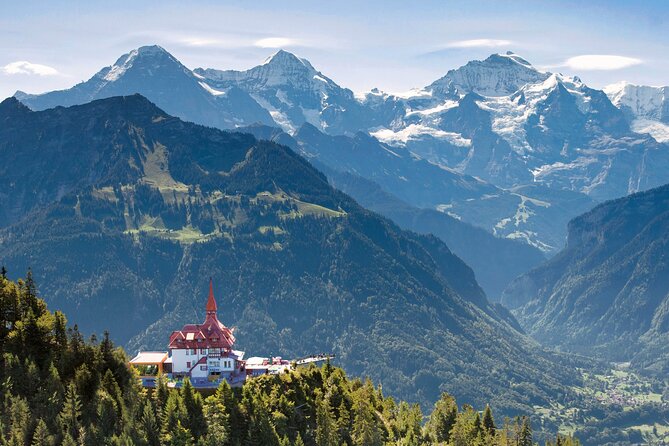
Harder Kulm also fits naturally into an Interlaken itinerary. The summit is easy to pair with time in town, and the pass includes access to selected Alpine summits such as Harder Kulm. You get a high viewpoint without committing an entire day to a distant mountain route.
Grindelwald, First, and the two-hour mountain outing
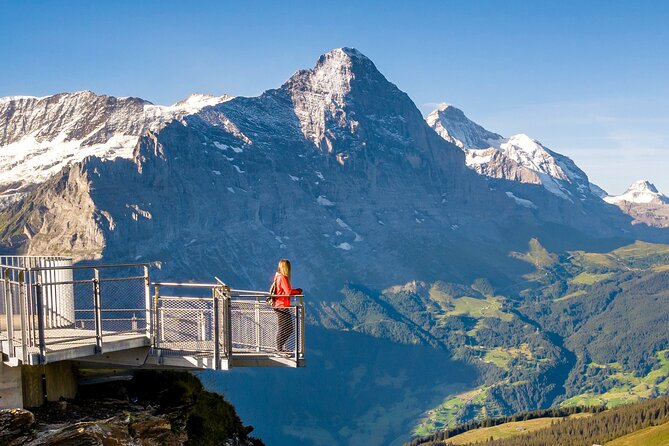
Grindelwald is one of the main places where the pass earns its keep. Its rail and lift connections open the door to several walks and mountain viewpoints, including Mount First.
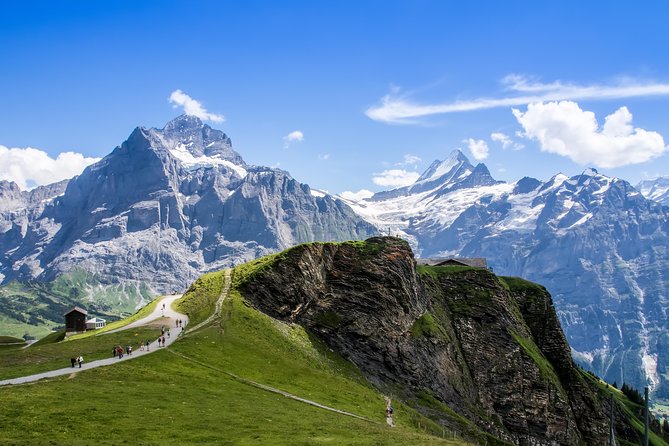
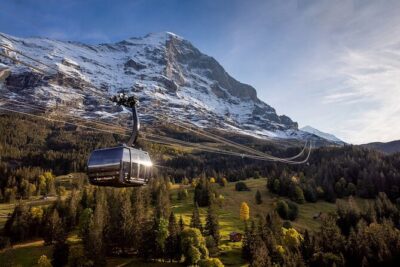
The Firstbahn route leads from Grindelwald toward First, and the suggested visit allows about two hours. That is enough time for a focused mountain outing, though you may want longer if your purpose is hiking rather than simply reaching the summit station.
I like First as part of a flexible pass day because you can decide how much time to spend once you see the weather. If the views are clear, continue with a walk. If clouds roll in, return to Grindelwald and use the railway network elsewhere. The pass gives you that option without making each change feel like a new financial decision.
The pass also includes free travel to Männlichen. This is worth noting when you compare routes around Grindelwald and the Lauterbrunnen Valley. Männlichen can serve as a practical high point for a walk, and its inclusion adds another reason to choose the pass for an active itinerary.
One warning: the included transport does not mean every lift in the Grindelwald area is covered. The supplied information specifically notes that Pfingstegg may not be included. Check the exact route before setting out, especially if you are choosing a lift because it appears on a hiking map.
Lauterbrunnen and Kleine Scheidegg by rail
Lauterbrunnen offers a different kind of outing from Grindelwald. Instead of a high ridge or open summit station, you get a deep valley setting with rail connections leading toward mountain routes and walking paths.
The pass is useful here because you can combine several stops without buying a separate ticket at each stage. You might use Lauterbrunnen as a base for a walk, continue toward Kleine Scheidegg, or link the valley with other places in the Jungfrau region.
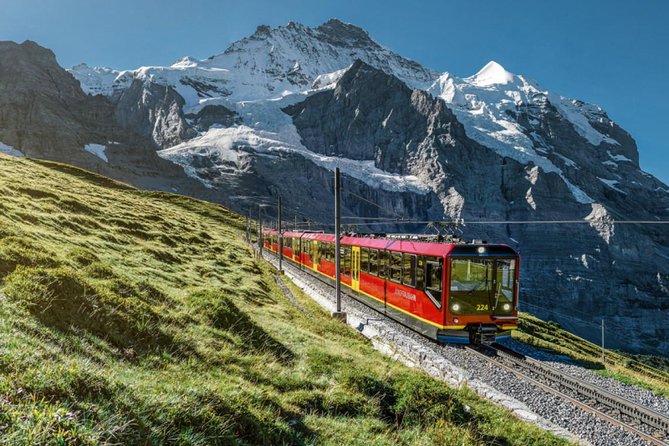
Kleine Scheidegg is one of the key rail points beneath the Eiger, Mönch, and Jungfrau. The journey itself is part of the experience, with mountain railway travel replacing ordinary road transport. For many people, that distinctive train ride is one of the main reasons to spend several days in this area rather than making a quick visit from farther away.
Do not confuse access to the Jungfrau region with a fully included trip to Jungfraujoch, the Top of Europe. The connection from Eigergletscher to Jungfraujoch is not included. Pass holders can buy that final connection locally at a reduced price, but it remains an extra cost.
This is the pass’s most important limitation. If Jungfraujoch is your main goal, add the extra fare to your budget. The pass can still reduce the cost of reaching the surrounding stations, but it does not cover the entire ascent.
A few more Switzerland trips worth comparing
- From Interlaken: Jungfraujoch Top of Europe Ticket
★ 4.0 · 251 reviews - Mount First Gondola Ride from Grindelwald
★ 4.0 · 206 reviews - Cheese and chocolate on mountain summit
★ 4.5 · 31 reviews - Grindelwald First (Top of Adventure) Ticket incl. Cliff Walk
★ 3.5 · 8 reviews
Schynige Platte and a classic mountain railway
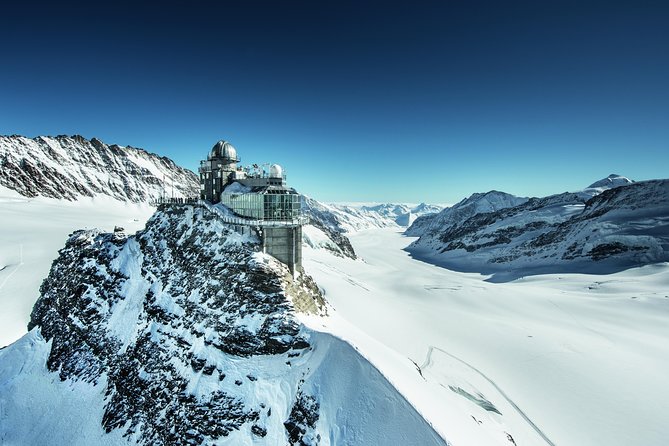
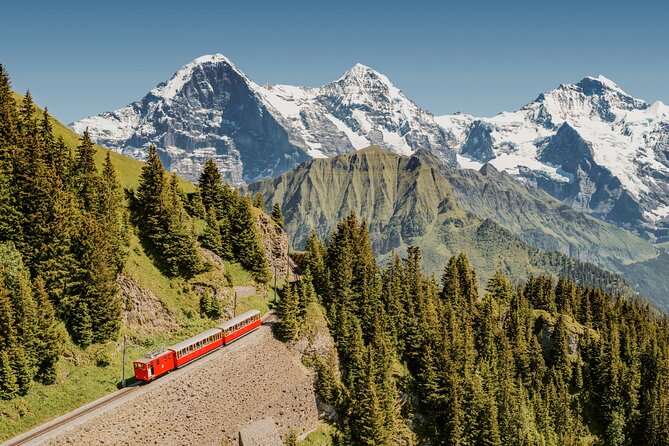
Schynige Platte is listed as a one-hour stop, making it easy to add to a wider day. The mountain railway journey and high viewpoint give you a change of pace from the busier connections around Interlaken and Grindelwald.
A one-hour stop is enough for a quick look, but I would treat that as a minimum rather than a complete visit. If you plan to walk, take photographs, or simply sit with the view, allow extra time in your own schedule. The pass is at its best when you do not have to rush from one ticketed attraction to the next.
As with all mountain transport, operation can depend on the season. Several railways in the area close during winter, and some do not reopen until late May. Check operating dates before buying a pass for a specific calendar period. A pass cannot make a closed railway run.
How to handle routes that are only partly covered
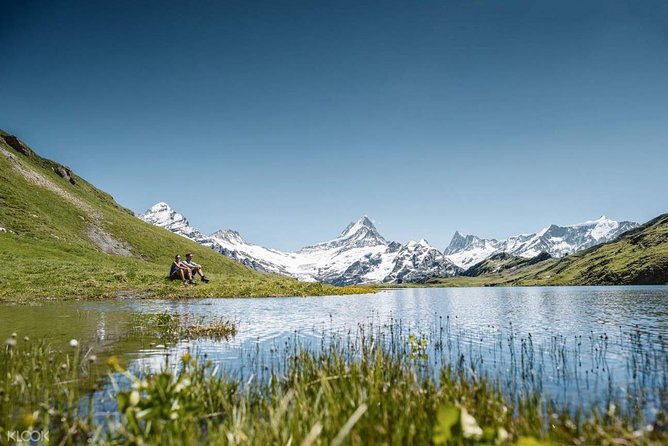
The name Jungfrau Travel Pass can sound broader than its actual coverage. It applies to selected transport lines in the immediate Jungfrau region, not every cable car and mountain train in the Swiss Alps.
Schilthorn is a good example. Some sections may require payment, including the lower section between Allmendhubel and Mürren. Pfingstegg is another route that may not be covered. The final Eigergletscher to Jungfraujoch connection also costs extra.
This does not make the pass poor value. It means you need a route map and a little preparation. Before leaving each morning, check:
- The exact start and end stations of your route
- The lifts and railway sections included in your pass
- Any reduced fares for excluded sections
- Seasonal operating dates
- Boat coverage for your selected pass length
The practical benefit is that even excluded routes may come with a discount. Still, do not assume that a discount makes every side trip worthwhile. Add the extra fare to your daily budget and decide based on the view or walk you want.
What happens when the weather turns bad
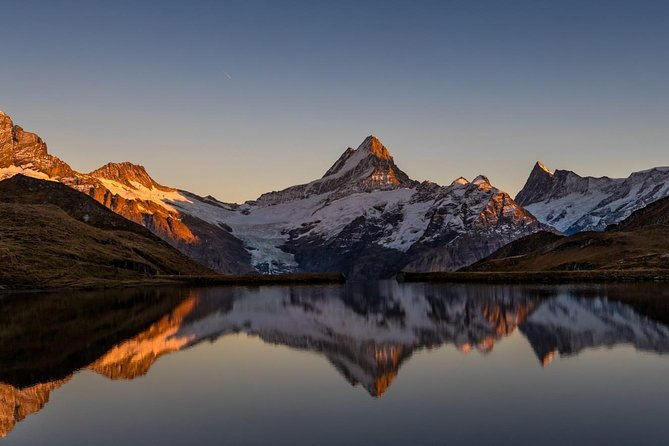
The Alps are weather-dependent, and this pass does not remove that risk. A three-day pass used during two days of heavy rain or snow may offer poor value, especially if high viewpoints disappear into cloud.
You cannot simply place the pass on hold for a bad day and restart it later. Once the valid period begins, the days run consecutively. That makes a short pass more exposed to bad weather than a longer stay with several possible outing days.
I would use the forecast to plan your strongest mountain routes first, while keeping lower-level rail or boat outings as backups. The pass helps on a mixed-weather trip because you can change direction without paying for a completely new plan. It does not help if every day is poor and the mountain railways offer nothing to see.
For this reason, a five- or six-day pass can be easier to justify than a three-day pass for an extended stay. You have more time to use the network, and you can shift your best views to the clearest day.
Mobile ticket, pickup, and the small paperwork trap
The experience is described as using a mobile ticket, and confirmation arrives when you book. But there is an important practical wrinkle: the booking voucher may need to be exchanged for an official rail pass at a railway office in the Jungfrau region.
Do not rely only on the assumption that the digital voucher on your phone will satisfy every conductor. Carry the voucher and check the exchange instructions before your first major journey. A printed copy may also be sensible, especially if you are moving through several stations.
Once the pass is properly issued, its main advantage becomes clear. You can move from train to gondola to boat without lining up for a fresh ticket at each stop. That convenience is not just about speed. It lets you respond to weather, energy, and changing plans.
The pass is suitable for most people, and service animals are allowed. It operates near public transport rather than requiring private transfers, so you should be comfortable reaching stations and lifts on your own.
Choosing the right pass length
The three-day option suits a compact stay with a clear plan and good weather. It can pay off if you use trains and lifts heavily each day, but it leaves little room for rain, missed connections, or a slow morning.
Four days gives you slightly more breathing room, though boat coverage remains an important point to verify. Five and six days are the strongest choices for many active schedules because they allow more mountain outings, town-to-town transfers, and weather changes.
Seven and eight days make sense for a longer stay focused on the Jungfrau region. They are less attractive if you plan to spend much of the time elsewhere in Switzerland, since the pass covers the immediate area rather than the whole country.
I would sketch your likely days before booking. List the transport-heavy outings, then compare those fares with the selected pass. Include the rides you would take on a rainy day, not just the perfect-weather summit trip.
Who should book it
Book the Jungfrau Travel Pass if you want several days of independent exploring around Interlaken, Grindelwald, Lauterbrunnen, Kleine Scheidegg, First, Schynige Platte, Harder Kulm, and Männlichen. It is especially useful for hikers and anyone who values the freedom to switch trains, gondolas, buses, and boats without buying a ticket at every stop.
Think twice if you plan only one or two paid excursions, if your schedule is mostly walking, or if Jungfraujoch is your only reason for visiting. Budget separately for excluded sections and remember that weather can reduce the value of a short, consecutive pass.
For an active three-day stay with good forecasts, it can be excellent value. For a longer visit, the five- or six-day versions offer a better cushion for weather and a wider choice of routes. Free cancellation is available when you cancel at least 24 hours before the experience start time. Inside that window, the payment is not refunded.
FAQ
How long is the Jungfrau Travel Pass valid?
You can choose a pass valid for three, four, five, six, seven, or eight days.
Does the pass include Jungfraujoch, the Top of Europe?
No. The connection from Eigergletscher to Jungfraujoch is not included. Pass holders can buy that connection locally at a reduced price.
Does the pass include boat rides?
Boat coverage depends on the pass length. The supplied details specify that boat rides are not included with the three- and four-day passes, while five-day and longer passes include them.
Is travel to Männlichen included?
Yes. The Jungfrau Travel Pass includes free travel to Männlichen.
Are food, drinks, and a guide included?
No. The pass covers selected transport lines only. Food, drinks, guide services, and hotel pickup and drop-off are not included.
Can I cancel for a full refund?
Yes, if you cancel at least 24 hours before the experience start time. Cancellations made less than 24 hours before the start time are not refunded.
Recently added in Switzerland
- Self-Guided Audio City Tour in Zurich★ 4.0 · 15 reviews
- Zurich Scavenger Hunt and Sights Self-Guided Tour★ 5.0 · 10 reviews
- Full-Day Private Zurich Sightseeing Tour and Chocolate Tasting★ 5.0 · 5 reviews
- Zurich and Suroundings (Private Tour)★ 5.0 · 7 reviews
- Day trip to Swiss Villages from Zurich – Small Group Tour by Car★ 5.0 · 8 reviews
- Zürich: Private Car Tour to Rhine Falls, Titisee and Black Forest★ 3.5 · 4 reviews
- Zurich Airport Stress-Free Private Transfer★ 5.0 · 6 reviews
- Zürich, Lindt Chocolate, Rheinfalls and Stein am Rhein★ 5.0 · 14 reviews
Jungfraujoch Tours, compared.
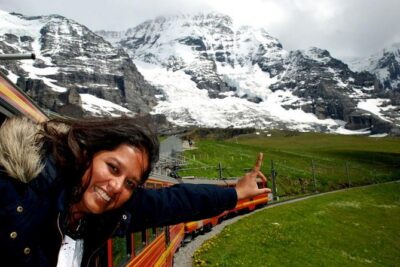
Jungfraujoch: Top of Europe Day Trip from Zurich
Read our review →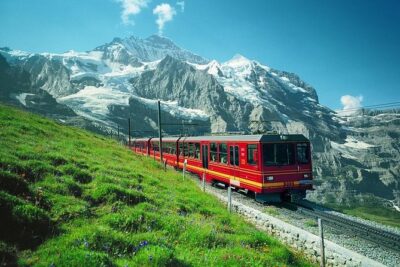
Jungfraujoch Day Trip from Zurich: Swiss Alps & Bernese Oberland
Read our review →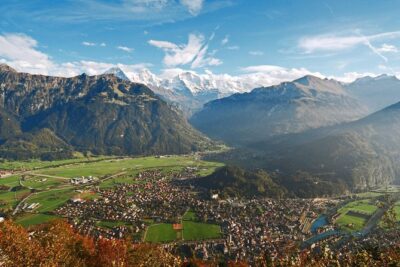
Jungfraujoch Top of Europe Day Trip from Lucerne
Read our review →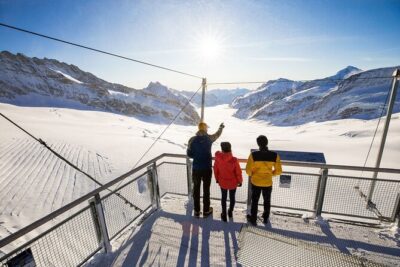
Jungfraujoch Top of Europe Day Trip from Interlaken
Read our review →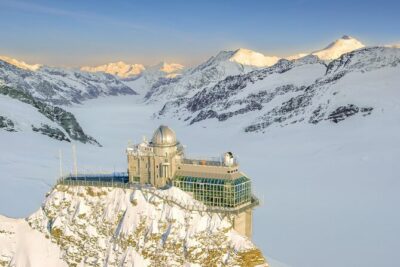
Jungfraujoch Day Trip from Lucerne with Eiger Express Gondola
Read our review →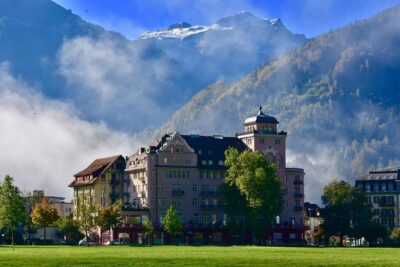
Eiger and Jungfrau Glacier Panorama Tour from Zurich
Read our review →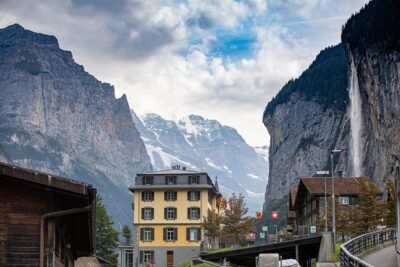
Daytrip to Jungfraujoch Top of Europe and Interlaken from Zurich
Read our review →Browse the lists this tour appears in