
Reviewed · WALKING TOURS
Private 1.5-Hour Nightwatchman Walk in Medieval Lucerne
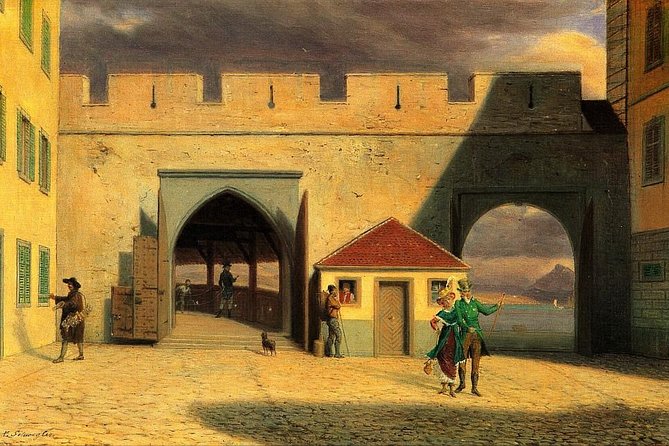
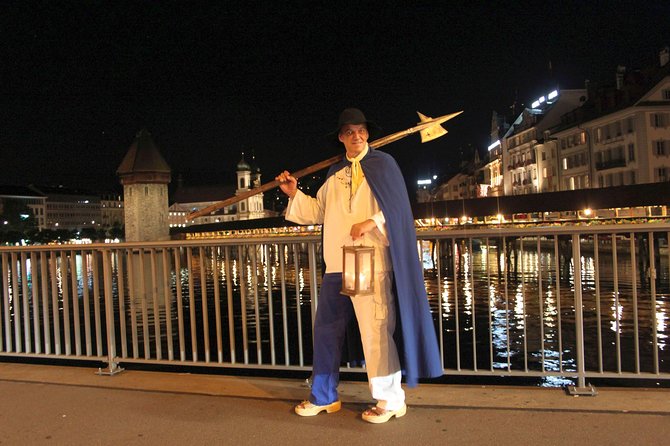
Lucerne’s old town becomes a different place after dark, when a costumed nightwatchman leads you past medieval chapels, painted houses, dark lanes, and the old city walls. The clever touch is the 1597 Martini plan, projected during the walk so you can match Lucerne’s first city map with streets and buildings still standing today.
I like the personal scale of this private tour, and I like the guide’s theatrical approach. Rolf, also named Ralph in one account, uses a fire horn, prayer, props, and projected images to turn local history into a story rather than a list of dates. The main drawback is price: at $165.26 per person, it makes the most sense for a small group that wants a dedicated guide, not for anyone seeking the cheapest introduction to Lucerne.
Why this night walk is different
- The Martini plan brings 1597 Lucerne to life, showing how much of the medieval street pattern remains.
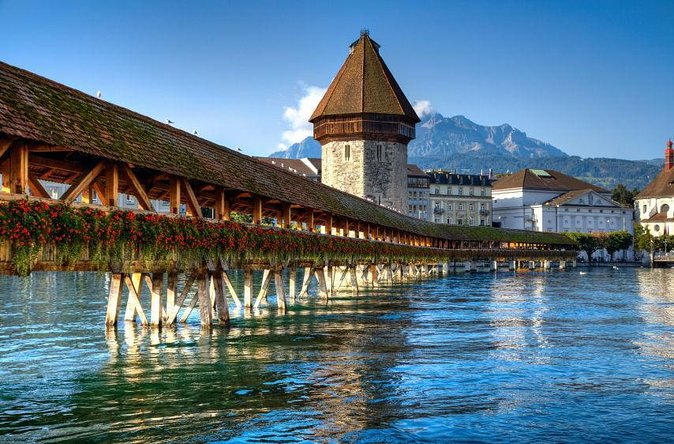
- The Water Tower predates Chapel Bridge, and the guide explains its dungeon, torture chamber, and secret room.
- Projected images add drama, especially during the stories about medieval punishment and the Dance of Death.
- You visit ordinary corners with unusual stories, including Furrengasse, Brandgässli, and Im Zöpfli.
- The private format keeps the evening focused, with only your group taking part.
- Winter visits are shorter, lasting about one hour from November through March rather than 1.5 hours.
Starting with a fire horn at Peter’s Chapel
Meet your guide at Rosengart Platz, near the heart of Lucerne’s old town. The walk begins at Peterskapelle, or Peter’s Chapel, one of the city’s oldest churches, dating to the 12th century.
The opening has a bit of theater. You hear a fire horn, followed by an invocation prayer, before the nightwatchman explains what life was like for someone charged with watching over a medieval city. This is not simply a guide in period clothing pointing at facades. The costume and ritual set the tone for an evening built around old fears, duties, and local legends.
The projector appears early, with a close look at the Martini plan from 1597. This is one of the strongest parts of the experience because it gives you a visual way to understand Lucerne. You can trace the route on the map and see that many buildings shown centuries ago remain part of the modern town.
Peter’s Chapel also introduces an interesting bit of social history. Nearby is Lucerne’s first private stone house, which provides the setting for the origin of the phrase stone rich. The point is not just that the building is old. Stone construction once signaled money and status in a town where many homes were built with less durable materials.
Admission to the chapel is not included, so the tour should be understood mainly as an outdoor walk with stops around historic sites. The focus is on the guide’s explanation, not on a long interior visit.
More Walking Tours in Lucerne
- Lucerne Walking & Boat Tour: The Best Swiss Experience
★ 4.5 · 417 reviews - Exclusive Private Lucerne Walking Tour with Local Guide 3 Hours
★ 5.0 · 80 reviews - 1.5-Hour Small-Group Nightwatchman Walk in Medieval Lucerne
★ 4.5 · 34 reviews
Chapel Bridge and the Water Tower’s darker side
From Peter’s Chapel, the route moves toward Chapel Bridge, Lucerne’s best-known landmark. The guide explains a detail many people miss: the Water Tower was built in the late 13th century, while Chapel Bridge dates from 1365. In other words, the tower came first.
You hear about the Water Tower’s interior, including its dungeon, torture chamber, and secret room, while seeing images rather than entering the structure. That distinction matters. The tour gives you context and visual material, but you should not expect an interior tour of the tower.
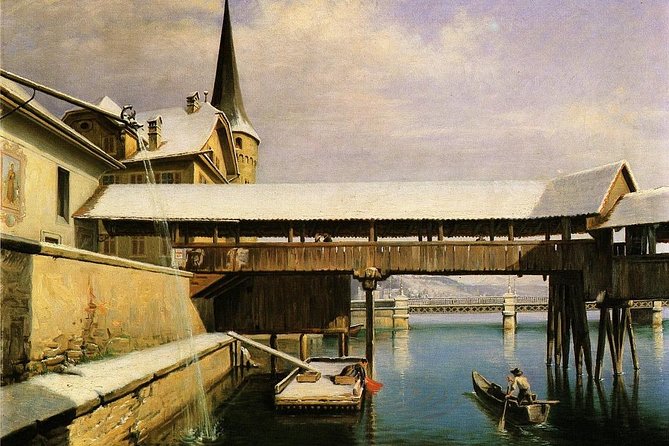
The guide also explains how Chapel Bridge received its name. Later, you cross the bridge and look at its painted panels, learning why the bridge crosses the Reuss diagonally. This is a useful way to see the structure beyond the usual photo stop. You begin to understand the bridge as part of the city’s old defensive and religious setting, not only as a scenic crossing.
Chapel Bridge is free to view, and this portion works well even if you have already walked across it during the day. After dark, the nightwatchman’s stories give familiar views a different mood.
Furrengasse and the strange side of medieval belief
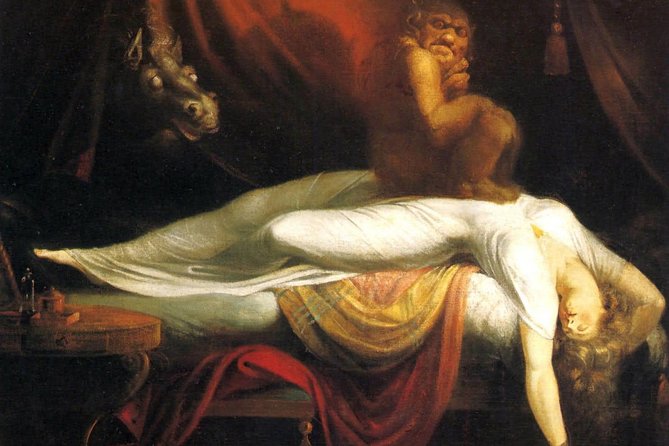
The walk turns through Furrengasse toward Kapellplatz, where the subject shifts from buildings to belief. You hear about daily life in the old Republic of Lucerne, then meet a ghost and the Toggeli, described as an incubus or love robber.
This is where the tour’s tone becomes playful and eerie. Medieval Lucerne was not only a place of churches, markets, and civic rules. People also explained bad dreams, fear, illness, and misfortune through spirits and supernatural figures. The guide’s role as a nightwatchman suits these stories, giving the walk a touch of mystery without turning it into a haunted-house show.
If you prefer only formal political history, this part may feel less essential. If you enjoy legends and the way folklore reflects ordinary fears, it adds a useful human side to the city.
Kornmarkt, the clock, and old measurements
At Kornmarkt, or Town Hall Square, the guide points out Lucerne’s Renaissance Town Hall and its tower. Pay attention to the clock, which has no minute hand. That small detail says a lot about how people once read public time. The town did not present time with the same precision you expect from a modern clock face.
You also hear the story of the Giant of Reiden and see the Lucerne Foot and Elle, official measures used in old Lucerne. These physical standards helped regulate trade in a period before modern, universal measurement systems. They also make the past easier to picture. Instead of hearing only about commerce, you see the tools that controlled it.
The town square is another place where the value comes from interpretation. You can walk past the town hall on your own, but the guide draws your eye to features you might otherwise ignore. Admission is not included, and the stop is primarily an outdoor explanation.
Same base, a completely different kind of day:
- Mount Pilatus Summit from Lucerne With Lake Cruise
★ 4.5 · 1,260 reviews - Jungfraujoch Top of Europe Day Trip from Lucerne
★ 4.5 · 840 reviews - Lake Lucerne Panoramic Sightseeing Cruise
★ 4.5 · 363 reviews - Mt Titlis Cable Car from Engelberg with Ice Flyer
★ 4.5 · 290 reviews
Brandgässli and Weinmarkt’s painted houses
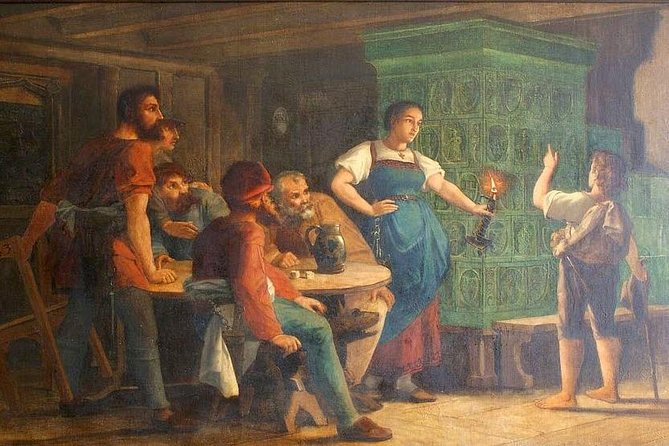
Brandgässli brings the group to the Riot of Lucerne before the route continues toward the former fish market, now called Weinmarkt. The alley is a reminder that medieval and early modern cities were not always orderly places. Civic tension, disputes, and public unrest formed part of Lucerne’s story too.
At Weinmarkt, look up at the old guest-house signs and the painted facades. This is one of the most attractive sections of the walk, but the guide adds more than decoration. You learn how signs helped identify businesses and houses in a time when many people relied less on formal street numbers.
The old pharmacy house of Renward Cysat carries a Latin sentence that translates as there is no cure for a broken heart. It is a small detail, but it captures the blend of commerce, faith, humor, and human feeling found throughout the old town.
This stop rewards you for moving slowly. During a daytime stroll, you might photograph the facades and continue. At night, with the guide directing your attention, you have a better chance of noticing the signs, inscriptions, and painted details.
Im Zöpfli and the hard facts of medieval justice
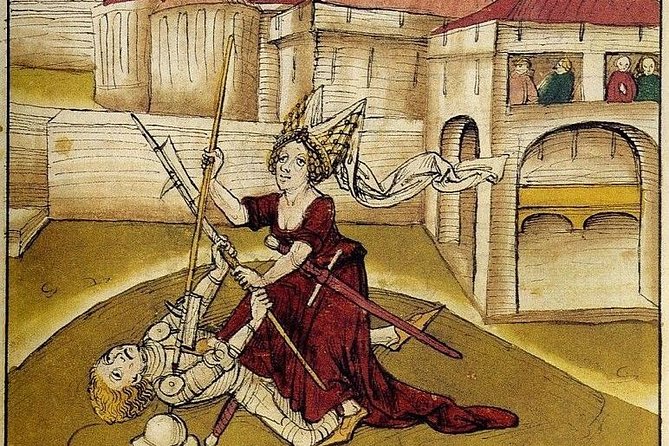
At the riverside square called Im Zöpfli, the subject turns to law and order. Projected paintings show methods of prosecution, interrogation, and corporal punishment used in medieval Lucerne.
This is likely the most serious part of the walk. The projector helps because you are not asked to imagine every detail from a verbal description alone. You see historical images while the guide explains the system behind them.
The material may not suit young children or anyone who dislikes grim history, although the tour has been enjoyed by a family with children and teenagers. The private format helps here. Your group can decide how much attention to give this section, and the guide can shape the pace more easily than on a large shared walk.
For me, this is a useful reminder that the old town’s handsome facades had a strict civic world behind them. Law, punishment, and public order were visible parts of city life.
Reussbrücke, the Mill Bridge, and the old defenses
After Im Zöpfli, you cross Reussbrücke and look toward the Spreuerbrücke, also called the Mill Bridge, the Needle Dam, and sections of the Musegg Wall. The route gives you a compact view of Lucerne’s old defensive and water-management systems.
You do not spend long at each sight, so this is more of a guided orientation than a full visit. Still, the sequence helps connect the city’s parts. Bridges carried people and goods, the dam controlled the river, and the walls marked the limits of the old town.
The route’s short stops, usually about ten minutes each, keep the evening moving. They also mean you should not expect lengthy time inside museums or monuments. This is a walking narrative through the city itself.
The pharmacy window and guardian demons
A few steps farther, you reach the medieval pharmacy window of the Alte Suidtersche Apotheke. The guide explains the building and its location, giving you another close look at a detail that is easy to miss on a self-guided walk.
The pharmacy stop fits the tour’s wider interest in old trades and everyday life. You are not only hearing about rulers and churches. You are also seeing where medicine was prepared and sold, and how commercial buildings shaped the streets.
The guide then points out guardian demons connected with the legendary house of Lux Ritter. You hear why the first two floors look different from the third, followed by the story of Hans von Trient, an unlucky stonemason. These stories add a local voice to the architecture. A building becomes the setting for human ambition, bad fortune, and superstition.
Ritterscher Palace and the projected Dance of Death
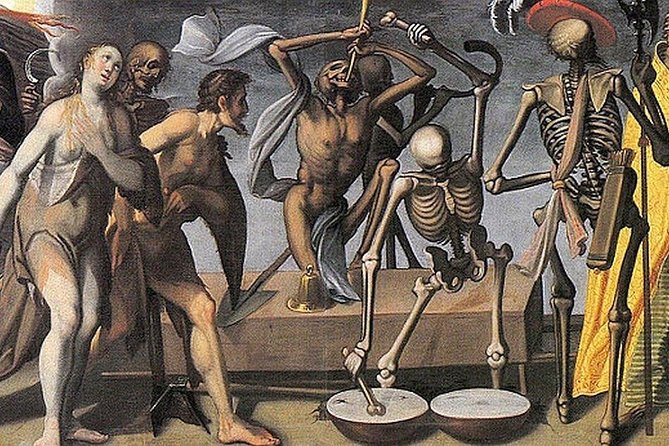
The most theatrical stop comes at Ritterscher Palace. Here, the guide presents seven paintings from the Dance of Death by projecting them onto a house wall.
Dance of Death imagery has a simple message: death comes for everyone, regardless of rank. Seeing the images projected in the old town at night makes the point more immediate than reading about the theme in a museum label.
You also hear more about the house of Lux Ritter and the stonemason Hans von Trient. The combination of architecture, legend, and projected art is one reason this experience feels different from a standard city walk.
Admission is not included at this stop. Again, the value is the outdoor presentation and the guide’s storytelling rather than entry to a palace interior.
The Jesuit Church and the final crossing
The route passes the Jesuit Church, described as Switzerland’s first Baroque building, dating from 1677. It is a later monument than the medieval sites, but its inclusion shows how Lucerne changed over time. The city did not stop developing after the Middle Ages.
The walk then returns across Chapel Bridge. You get another look at its paintings and hear the explanation for its diagonal route across the river. Ending where the tour began makes the route easy to follow, and you finish back at the Rosengart Platz meeting point.
Most stops are listed as about ten minutes, but the overall timing is approximately one to 1.5 hours. From November through March, the tour lasts one hour. Since the walk operates in all weather, wear suitable clothing and shoes. A drizzly evening need not cancel the experience, but wet pavement and cold air can make a short outdoor tour feel longer.
What the private format is worth
The listed price is $165.26 per person. That is a serious cost for a 1.5-hour walk, especially if you are traveling alone or as a couple. The value improves for a family or small group using the private format, since only your party participates and the guide can keep the presentation focused on your interests.
You are paying for more than route guidance. The package includes a professional medievally dressed local guide, postcards of old Lucerne, and all taxes, fees, and handling charges. The real expense, though, is the guide’s time, costume, props, projector, and local storytelling.
I would not choose this tour if you simply want to see Chapel Bridge and the old town. You can do that for free. I would consider it if you want the city’s legends, social history, old measurements, punishment customs, religious sites, and painted facades tied together by one narrator.
The tour is offered in English, and the strong English presentation is important because the stories and wordplay carry much of the experience. Service animals are allowed, the meeting point is near public transportation, and most people can participate. Confirmation arrives at booking, and you can cancel up to 24 hours before the start for a full refund.
Who will enjoy this Lucerne night walk
This experience suits you if you enjoy:
- Medieval legends mixed with documented city history
- Short walking stops rather than long museum visits
- Costumed interpretation and light theatrical touches
- Small private tours with room for questions
- Architecture, murals, inscriptions, and old civic customs
- Seeing a familiar city after dark
Families can enjoy it, including those with teenagers, but the sections on torture and corporal punishment are frank in subject. History fans will get the most from the Martini plan, the Water Tower explanation, the old measures, and the Dance of Death images.
If you want a quiet stroll with little narration, this is not the right choice. The guide uses a strong performance style, including a fire horn, prayer, projected images, and character work. That energy is a benefit for some people and too much for others.
Should you book it?
Book this private nightwatchman walk if you want Lucerne explained through stories, odd details, and local character rather than through a standard sightseeing checklist. Rolf, or Ralph as named in one account, is presented as a Lucerne-born guide with a clear passion for his city, and the experience depends heavily on that personal delivery.
Skip it if the price feels high for a short outdoor walk or if you mainly want interior access to monuments. For a small group that values a memorable evening, the Martini plan, the projected Dance of Death, the Water Tower stories, and the old-town legends give the tour a clear reason to exist.
FAQ
Where does the tour begin?
The tour begins at Rosengart Platz, 6004 Luzern, Switzerland.
Where does the tour end?
The walk ends back at the meeting point.
How long does the tour last?
The tour lasts approximately one to 1.5 hours. From November through March, the duration is one hour.
Is the tour private?
Yes. Only your group participates in this private activity.
What language is offered?
The tour is offered in English.
How much does the tour cost?
The listed price is $165.26 per person.
Is admission to attractions included?
Admission tickets are not included for stops where an entry ticket may apply. Several outdoor sights, including Chapel Bridge, are free to view.
Does the tour operate in bad weather?
Yes. It operates in all weather conditions, so you should dress appropriately.
Can service animals participate?
Yes. Service animals are allowed, and the tour is near public transportation.
Recently added in Lucerne
- Private Transfer: Lucerne to Zurich Airport ZRH by Luxury Van★ 4.5 · 6 reviews
- Weggis Vitznau Foxtrail Helios★ 4.5 · 8 reviews
- Private Transfer: Lucerne to Zurich Airport ZRH by Business Car★ 5.0 · 11 reviews
- Touristic highlights of Lucerne on a Private half day tour with a local★ 4.0 · 5 reviews
- The Lives and Legends of Lucerne: A Self-Guided Audio Tour★ 5.0 · 6 reviews
- Paragliding Tandem in Switzerland★ 5.0 · 9 reviews
- Tandem Flight Zurich-Engelberg★ 5.0 · 7 reviews
- Private city tour in lucerne★ 5.0 · 4 reviews
Walking Tours, compared.

Zurich Walking Tour With Cruise and Aerial Cable Car
Read our review →
Lucerne Walking & Boat Tour: The Best Swiss Experience
Read our review →
3 in 1: Zurich Walking Tour – Cruise on the Lake – Cable Car Ride to Felsenegg
Read our review →
Glacier 3000 Ticket Including Cable Car and Peak Walk by Tissot
Read our review →
Bern Walking Tour: Explore Top Sights & Hidden Gems
Read our review →Browse the lists this tour appears in