
Reviewed · WALKING TOURS
Lugano Private Walking Tour with a Professional Guide
Lugano’s appeal comes from its unusual mix: Swiss order with an Italian mood, set beside Lake Lugano and backed by sunny hills. This private walk connects the city’s Celtic and Roman roots with Napoleon, Italian unification, tourism, and banking, so you get more than a quick look at pretty squares.
I like the private format, since your guide can adjust the route and answer questions without a large group slowing you down. I also like the two-hour length. It gives you a useful introduction to Lugano while leaving time for the lake, museums, shopping, or a meal.
The main caution is the price: $421.97 per group, with up to 15 people, is a steep buy for one or two people. One serious service failure is also part of the record: a guide once could not attend because of illness, and a replacement was unavailable. Confirming direct contact details before the day is sensible.
Key points to know before you book
- A private route through Lugano’s old and modern quarters: You visit major squares, streets, churches, and green spaces with only your own group.
- History that reaches beyond the postcard view: The guide covers Celtic and Roman influence, the Gotthard Pass, Napoleon, Ticino’s independence, and Italian unification.
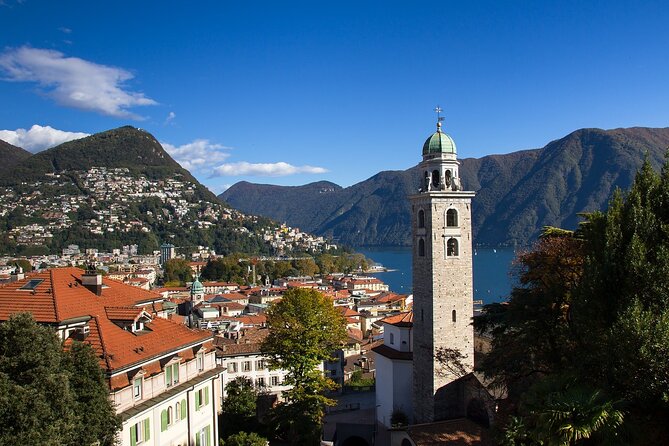
- Lugano Cathedral is a major stop: The tour includes the oldest sacred building in Switzerland, according to the experience description.
- Two hours is a practical introduction: You can get oriented without giving up your whole day.
- The group price works best for a family or larger party: At the full limit of 15 people, the cost comes to about $28 per person.
- A guide can shape the walk around your interests: Customization is possible on the spot, though entrance fees are not included.
Starting at Piazza Rezzonico
The walk begins at Piazza Riziero Rezzonico 7, near the center of Lugano, and returns to the same meeting point. That makes the start and finish easy to understand, especially if you are fitting the walk between a train arrival, lunch, or another activity.
A private start is useful here because Lugano’s center is compact but not simple in character. The city shifts from lakeside and garden settings to formal civic squares, narrow old-town streets, churches, and shopping lanes. A local guide can help you see how those parts connect instead of treating them as separate sights.
The meeting point is near public transportation, and the activity is suitable for most participants. Service animals are allowed. The information provided does not give a detailed accessibility assessment for every street or interior, so if your group has mobility needs, ask the operator about the exact route before booking.
More walking tours in Lugano:
- Lugano and its history exclusive walking tour
★ 4.5 · 15 reviews - Guided Walk from Lugano to Gandria promoted by Lugano Region – return by boat
★ 4.5 · 15 reviews - Lugano, Lake Lugano, private walking guided tour
★ 5.0 · 4 reviews
Villa Ciani and Lugano’s lakeside setting
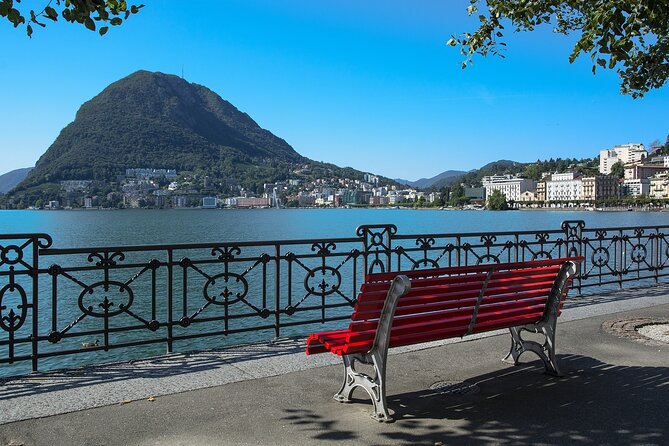
Villa Ciani is one of the early stops. Its location near the lake introduces the side of Lugano that attracts many first-time visitors: sunshine, water, gardens, and a mild, almost Italian feel.
This is a good place for the guide to explain why Lugano developed as more than a pretty resort. The city’s position in Ticino placed it between northern Europe and Italy, and the region’s political and commercial ties changed over many centuries.
Do not expect a long garden visit or a detailed interior tour based on the information available. Villa Ciani functions as one point on a walking route, not as a separate admission-based attraction. Since entrance fees are excluded, you should not assume that paid interiors are part of the two-hour experience.
Piazza Indipendenza and the story of Ticino
At Piazza Indipendenza, the walk turns toward the political story of the region. The central question here is control. Ticino spent three centuries caught in conflict over who would rule the area, a subject that helps explain why the canton feels Swiss in government but Italian in language and atmosphere.
The guide also covers the period of Napoleon, the Helvetic Republic, and the later independent Republic of Ticino. These subjects can sound abstract in a book, but they become easier to follow when tied to the streets and public spaces around you.
I would pay close attention during this part of the tour if you want context for the rest of your Swiss trip. Lugano is not simply an Italian-style city placed inside Switzerland. Its identity grew from border politics, shifting governments, trade routes, and cultural exchange.
San Rocco and Lugano’s religious past
Chiesa di San Rocco brings the route to one of Lugano’s historic religious buildings. The stop adds a quieter note after the civic and political discussion at Piazza Indipendenza.
You can expect the guide to explain the church as part of Lugano’s older urban fabric. The itinerary does not promise an interior visit, a service, or a special religious event, and entrance fees are not included. If the doors are closed or a paid entry is required, the value here is the explanation and exterior setting rather than guaranteed access.
The tour’s focus on sacred buildings also helps you read the old city more clearly. Churches were not only places of worship. They marked neighborhoods, shaped daily routines, and gave travelers important points of reference long before modern maps and phones.
A few more Lugano trips worth comparing
- Skip the Line: Falconeria Locarno Ticket
★ 4.5 · 155 reviews - Lugano Region Guided Excursion from Lugano to Monte San Salvatore by funicular
★ 4.5 · 30 reviews - Lugano Mountains, tour from Milan, Lugano, lake Como.
★ 5.0 · 27 reviews - Lugano & Morcote, Lake Lugano, private guided tour, from Lugano
★ 4.5 · 21 reviews
Via Canova and the city between old and new
Via Canova provides a change of pace. This street links the historic center with the more polished, modern side of Lugano, where shopping, cafés, offices, and public life overlap.
The story of Lugano’s growth becomes especially useful here. The guide discusses the rise of tourism and the arrival of the banking system, two forces that helped change the city from a regional center into an international destination.
You may find this part less dramatic than the cathedral or old squares, but it is important. A city walk should not show only beautiful old buildings. Lugano’s present-day character comes from modern money, visitors, commerce, and services as much as from medieval streets.
Piazza Riforma and the civic heart
Piazza Riforma is one of the route’s most central public spaces. It offers a natural pause between the older religious quarters and the commercial lanes that follow.
The square is also a useful setting for the guide’s account of political change. Its name points toward reform and helps connect Lugano to the age of Napoleon and the creation of new political arrangements in Europe and Switzerland.
A private guide can make this stop more useful by adjusting the amount of detail. If your group enjoys political history, you can spend longer on Ticino’s changing status. If children or less history-focused companions are with you, the guide can keep the explanation shorter and move on to the streets, buildings, and food stops that interest you most.
Piazza Cioccaro and the older town
Piazza Cioccaro takes you further into Lugano’s historic center. Here the tour shifts away from broad civic spaces and toward the tighter scale of the old town.
This is where a guide earns the cost of a private walk. Without context, you may see attractive buildings and narrow streets but miss how the center developed. With a local explanation, the route becomes a record of trade, worship, political authority, and everyday movement.
The walk is still only about two hours, so do not expect an exhaustive tour of every lane. The benefit is a carefully chosen introduction. You get enough structure to return later on your own and explore the places that caught your attention.
Lugano Cathedral, the tour’s major landmark
Cattedrale di San Lorenzo is the most important religious stop on the route. The experience description identifies it as the oldest sacred building in Switzerland, making it a major reason to choose this particular walk.
The cathedral also gives the guide a strong point for explaining Lugano’s long religious and civic development. Its place in the old center ties together the Roman and medieval past with the city you see today.
You should ask your guide at the start whether the route includes interior access. The supplied details promise a visit to the cathedral but do not include entrance fees or guarantee a special opening. If you need to see the inside, clarify that before the walk begins.
Even an exterior explanation can be worthwhile, but the difference matters when you are comparing this experience with a tour that includes paid admissions. The wording here supports guided sightseeing, not a package of entry tickets.
Via Pessina and the everyday old town
Via Pessina brings the walk back to daily Lugano. This is a street where the old center feels practical rather than ceremonial, with shops and local movement shaping the experience.
This stop helps balance the major themes. The tour is not only about rulers, churches, and political borders. It also shows how the historic center remains part of ordinary city life.
The guide can also help you decide where to return later. One guide, Carin, is specifically praised for offering useful suggestions about dinner and other local plans, while another guide, Steffia, is remembered for making the past feel connected to the present. Those details point to a helpful use of the walk: treat it as both a history introduction and a chance to gather ideas for the rest of your stay.
Via Nassa and Lugano’s commercial side
Via Nassa is the final named stop before returning to Piazza Rezzonico. This historic shopping street gives the tour a fitting finish because it brings together commerce, tourism, and the Italian flavor that runs through Lugano.
The street helps explain why the city became an important stop for visitors. Tourism did not grow in isolation. It followed transport improvements, changing travel habits, the opening of routes through the Alps, and the city’s position between Switzerland and Italy.
The broader story includes the building of the Gotthard Pass. That route changed access across the Alps and helped connect Ticino with northern Switzerland and wider European trade. The guide’s explanation can make Via Nassa feel less like a shopping stop and more like part of a much longer commercial story.
What the two-hour format really gives you
Two hours is enough for orientation, not total coverage. You will visit a strong selection of central sights, but you will not receive a full museum program, a long lake excursion, or a detailed tour of every church interior.
I see the short length as a benefit for most people. You can take the walk on your first day, learn the shape of the center, and then spend the afternoon choosing what deserves more time. It also suits families and mixed-interest groups, since two hours is less tiring than a half-day history tour.
The private structure makes the short schedule more effective. A large public group may spend time waiting for people to gather or hear the guide. Here, your party stays together, and you can ask for more detail on architecture, politics, shopping, food, or local customs.
The route does involve city walking, and the supplied information does not state a total distance or terrain profile. Wear comfortable shoes and allow some flexibility. Lugano’s center includes old streets and changing settings, even if the walk remains manageable for most participants.
Is $421.97 a fair price?
The cost is $421.97 for a group of up to 15 people. That is expensive for one or two people, but the arithmetic changes quickly with a larger party:
- Two people: about $211 per person
- Four people: about $105 per person
- Eight people: about $53 per person
- Fifteen people: about $28 per person
For a family, wedding party, multigenerational group, or club of friends, the price can make sense. You get a private local guide, a flexible route, and a history-focused introduction without paying separately for each person in the group.
For a solo visitor or couple, I would compare the cost carefully with other guided options in Lugano. The private setting is the main premium. You are paying for attention and flexibility rather than for included admissions, transport, food, or a full-day program.
The absence of entrance fees is worth noting. You should budget separately if you want to enter any site that requires payment. The benefit is that the tour price stays focused on the guide and walking experience, but the total cost may rise if you add attractions afterward.
Guide quality and one important service concern
The strongest part of this experience is the human element. Carin has been singled out for leading a comfortable city walk, combining historical information with present-day suggestions, and remaining available for follow-up advice about dinner. Steffia has been praised for her enthusiasm and for making the city’s past feel immediate.
That is exactly what I want from a private city walk. Facts matter, but a good guide should also help you understand what you are seeing and give you practical ideas for using the city after the tour.
There is one clear warning. On one occasion, the scheduled guide became ill on the day of the tour, and no replacement could be found. Communication was also a problem. That appears to have been an exceptional failure, but it is still useful advice: keep the provider’s contact information before the tour date and confirm the meeting details in advance.
Free cancellation is available up to 24 hours before the start time. Changes or cancellations inside that window are not accepted for a refund, so keep the local start time in mind when making plans.
Who should book this Lugano walk?
I would choose this tour if you want a private introduction to Lugano’s history and your group can share the fixed price. It suits first-time visitors who want help finding the old center, families who prefer a shorter activity, and history-minded visitors interested in Ticino’s changing political identity.
It is also a good first-day choice. After two hours, you should have a clearer sense of where the civic center, cathedral, shopping streets, and lakeside areas fit together.
I would hesitate if you are mainly looking for lake scenery, museum entry, food tastings, or a long excursion beyond central Lugano. Those are not included. The walk focuses on streets, buildings, public squares, and the historical forces that shaped the city.
Should you book it?
Book this private walk if you have a group large enough to make the price reasonable and you value direct time with a local guide. The route covers Lugano’s main historic settings and gives you useful context about Celtic and Roman roots, the Gotthard Pass, Napoleon, Ticino, Italian unification, tourism, and banking.
For two people, the cost is hard to justify unless privacy and customization matter a great deal. For a family or group of friends, it becomes much better value. Confirm the guide’s contact information before the day, ask about cathedral access, and use the two-hour walk as your orientation to Lugano rather than expecting a full-day sightseeing program.
FAQ
How long does the Lugano private walking tour last?
The tour lasts approximately two hours.
Where does the tour begin and end?
It begins at Piazza Riziero Rezzonico 7, 6900 Lugano, Switzerland, and ends back at the meeting point.
Is this a private tour?
Yes. Only your group participates, and the group can include up to 15 people.
Can the tour route be customized?
Yes. Possible customization can be discussed with your local guide during the tour.
Are entrance fees included?
No. Entrance fees are not included in the tour price.
What is the cancellation policy?
You can cancel up to 24 hours before the experience start time for a full refund. Cancellations or changes made less than 24 hours before the start time are not accepted for a refund.
Recently added in Lugano
- Explore the Instaworthy Spots of Lugano with a Local★ 5.0 · 4 reviews
- The best of canyoning in Ticino★ 5.0 · 7 reviews
- Lugano, Lake Lugano, private walking guided tour★ 5.0 · 4 reviews
- Instagram and Photo tour of Lugano with a professional photographer.★ 5.0 · 7 reviews
- Lugano and its history exclusive walking tour★ 4.5 · 15 reviews
- Lugano and Bellinzona private full-day tour★ 5.0 · 6 reviews
- Guided Walk from Lugano to Gandria promoted by Lugano Region – return by boat★ 4.5 · 15 reviews
- Lake Lugano – a taste of culture★ 5.0 · 5 reviews
Walking Tours, compared.
Zurich Walking Tour With Cruise and Aerial Cable Car
Read our review →
Lucerne Walking & Boat Tour: The Best Swiss Experience
Read our review →
3 in 1: Zurich Walking Tour – Cruise on the Lake – Cable Car Ride to Felsenegg
Read our review →
Glacier 3000 Ticket Including Cable Car and Peak Walk by Tissot
Read our review →
Bern Walking Tour: Explore Top Sights & Hidden Gems
Read our review →Browse the lists this tour appears in