
Reviewed · WALKING TOURS
1.5-Hour Small-Group Nightwatchman Walk in Medieval Lucerne
Lucerne becomes a different city after dark. On this walk, a costumed nightwatchman leads you through lanes, squares, bridges, and old walls while a fire horn, projected images, and the 1597 Martiniplan bring medieval Lucerne into view. You are not just looking at pretty facades. You are hearing how people lived, worshipped, traded, broke the law, and faced punishment.
I like the clever use of visual aids, especially the old city map and projected paintings. I also like the small group, limited to 15 people, which makes it easier to hear stories in narrow streets. The main drawback is the pace: one person found the guide a little fast, and the subject occasionally turns gory when the talk reaches torture and corporal punishment.
What makes this walk worth your evening
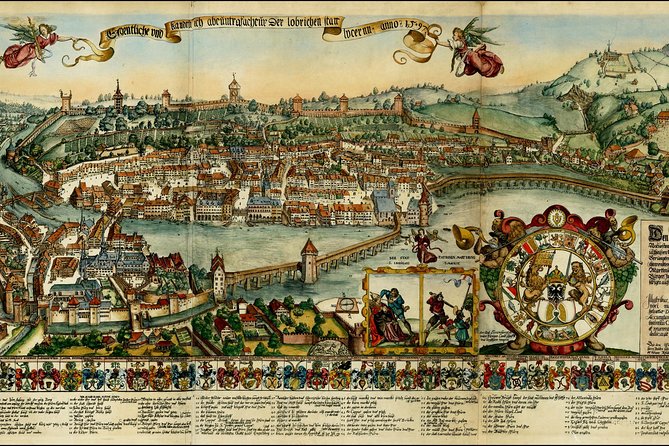
- The 1597 Martiniplan: See Lucerne’s first city map and follow a route through streets that still exist.
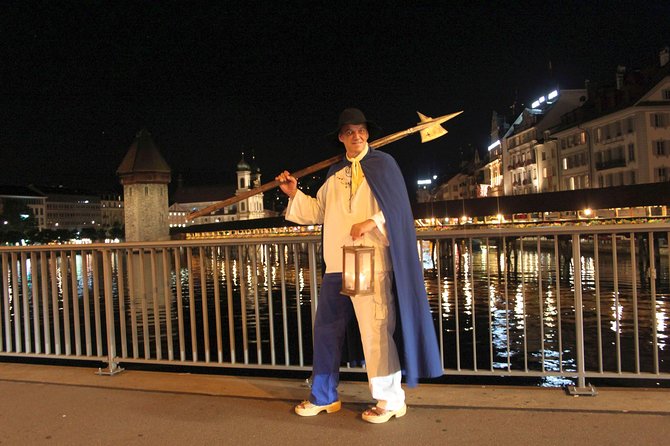
- A nightwatchman in period dress: The role gives the walk a clear character without turning it into a stage show.
- Medieval law and punishment: Projected images explain interrogation, prosecution, torture, and corporal punishment.
- Lucerne’s famous bridges: Compare the older Water Tower with Chapel Bridge, then see the Mill Bridge and Needle Dam.
- Local details beyond postcard views: Look for old guest-house signs, house frescos, pharmacy architecture, and official medieval measuring tools.
- A small extra touch: The guide provides old Lucerne postcards and a cup of fountain water during the walk.
Starting with fire, prayer, and the Martiniplan
Meet at Rosengart Platz, near Peterskapelle. The tour begins with a fire horn and an invocation prayer, a fitting signal that this is meant to feel like a night patrol rather than a standard daytime city walk.
At St. Peter’s Chapel, the guide sets the scene. This is Lucerne’s first church, dating to the 12th century, and it sits beside the first private stone house in the city. The story of that house also explains the expression stone rich, giving you a small language lesson tied directly to the street under your feet.
The most useful part of this opening is the projection of the Martiniplan. Dating from 1597, it is the first city map of Lucerne. You see the route laid out before you and learn that many buildings shown on the map remain in place. That detail gives the old town a stronger sense of continuity than a simple list of dates can provide.
The guide also introduces his own hard life as a medieval nightwatchman. Expect storytelling, not a formal lecture. The approach works well if you enjoy history with a bit of theater, though anyone hoping for a quiet architecture walk may find the character performance more prominent than expected.
More Walking Tours in Lucerne
- Lucerne Walking & Boat Tour: The Best Swiss Experience
★ 4.5 · 417 reviews - Exclusive Private Lucerne Walking Tour with Local Guide 3 Hours
★ 5.0 · 80 reviews - Private Classic Lucerne City Walk
★ 5.0 · 16 reviews
Chapel Bridge and the Water Tower
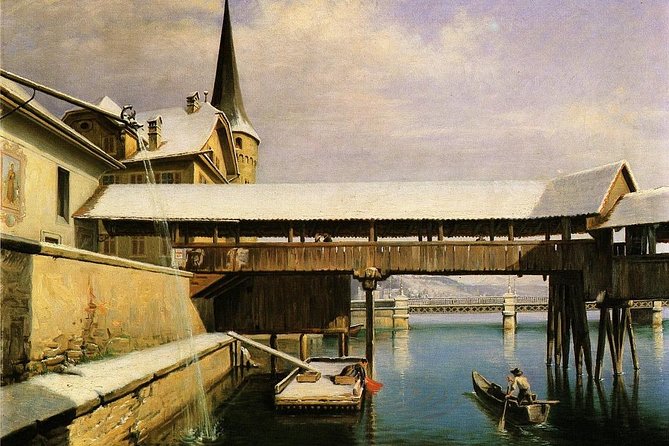
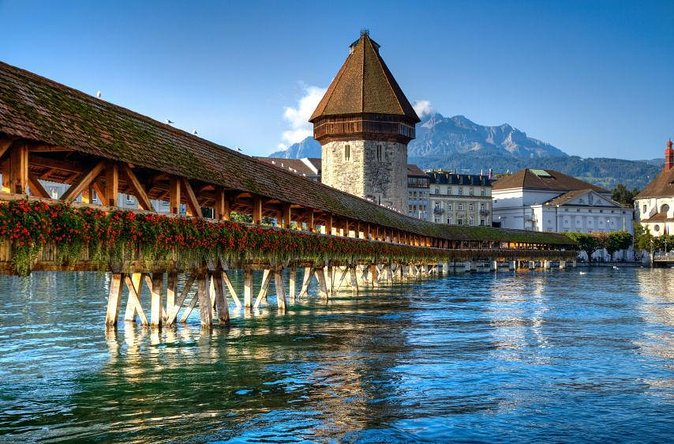
From Peterskapelle, the walk reaches Chapel Bridge. Most people know the bridge as Lucerne’s signature view, but the nightwatchman starts with a useful correction: the Water Tower is older.
The Water Tower dates from the late 13th century, while Chapel Bridge dates to 1365. You see projected pictures of the tower’s interior and hear about its torture chamber, dungeon, and secret room. Those details change the way you look at the tower. It is not just a picturesque stone building beside the river.
You also learn where the name Chapel Bridge comes from. The stop is short, about 10 minutes, so it does not become a full architectural lesson. That is a strength if you want a lively orientation, but a limitation if you prefer long periods to study the bridge and its paintings.
Furrengasse and the strange side of old Lucerne
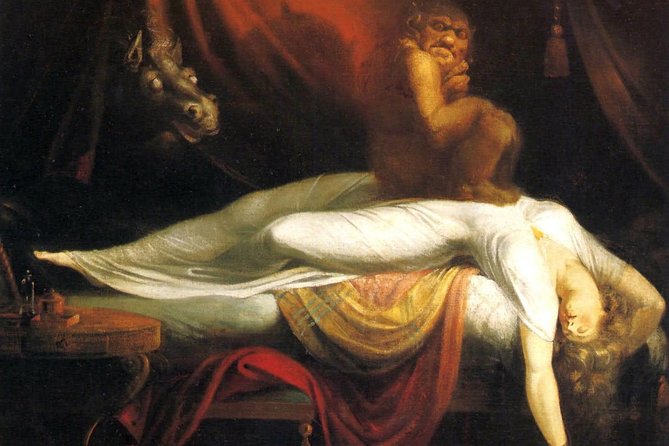
The route turns toward Kapellplatz and Furrengasse. Here the subject shifts from civic life to folklore, with stories of a ghost and the Toggeli, described as an incubus or love robber.
This section helps explain how medieval people understood danger that could not be easily explained. The story is odd, memorable, and a little creepy without needing a haunted-house setup. You get a glimpse of the beliefs that existed alongside church teaching, trade, and government.
The old Republic of Lucerne also enters the story here. The guide talks about daily life in the medieval city during its prosperous period, keeping the focus on people rather than only on monuments.
Kornmarkt, the clock, and the Giant of Reiden
At Kornmarkt, Lucerne’s Town Hall Square, the guide points out the Renaissance Town Hall and its tower. Pay attention to the clock: it has no minute hand, a small feature that says something about how time was once measured and displayed.
You also hear the story of the Giant of Reiden and see the Lucerne Foot and Elle, official measures used in old Lucerne. These are the kinds of details I value on a walking tour. A cathedral or bridge is easy to find on your own, but an obsolete measuring standard can pass unnoticed unless someone explains why it mattered.
The stop mixes civic power, commerce, and folklore. It is also a good place to pause and take in the square before the walk moves into darker material.
Same base, a completely different kind of day:
- Mount Pilatus Summit from Lucerne With Lake Cruise
★ 4.5 · 1,260 reviews - Jungfraujoch Top of Europe Day Trip from Lucerne
★ 4.5 · 840 reviews - Lake Lucerne Panoramic Sightseeing Cruise
★ 4.5 · 363 reviews - Mt Titlis Cable Car from Engelberg with Ice Flyer
★ 4.5 · 290 reviews
Brandgässli and the former fish market
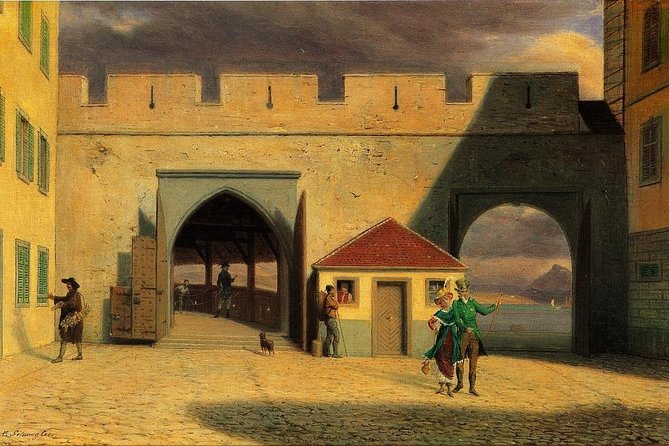
In Brandgässli, the nightwatchman tells the story of the Riot of Lucerne. The narrow alley gives the tale an appropriate setting, since medieval conflict feels easier to picture in a tight passage than in a broad modern street.
The route then continues to the former fish market, now called the wine market. This simple change of use helps you see that old Lucerne was a working town, not a preserved museum. Squares and lanes changed jobs over time, while the buildings continued to frame daily life.
Weinmarkt, frescos, and a broken-heart remedy
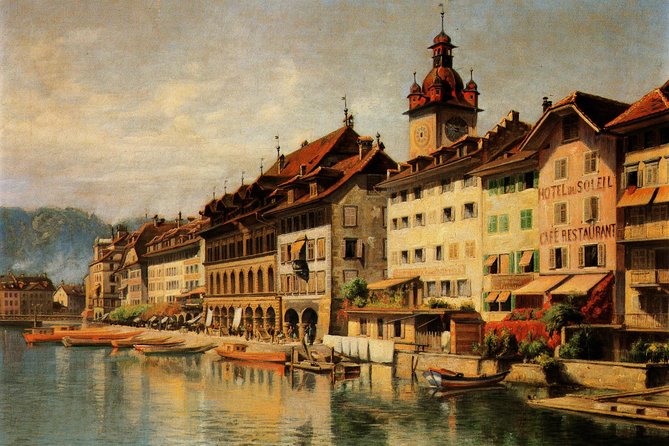
Weinmarkt is one of the more visually rewarding sections of the walk. You see old guest-house signs and house frescos, then stop at the former pharmacy house of Renward Cysat.
On the building is the Latin phrase Amor medicabillis nullis herbis, translated as There is no cure for a broken heart. It is a charming detail, but it also fits the tour’s wider interest in old buildings as records of work, belief, and private life.
The guide discusses the Reformation and Counter-Reformation while you taste Lucerne fountain water. This is a modest extra, yet it makes the stop feel local rather than purely historical. You are not simply looking at a building. You are noticing a phrase, hearing about religious conflict, and taking part in a small city tradition.
The route passes the lower wine market, where the pillory once stood. Again, the subject can become grim. If you are sensitive to punishment stories, know that this walk does not soften medieval justice. The material is presented as part of the city’s past, with projected images later making the details more direct.
Im Zöpfli and medieval justice
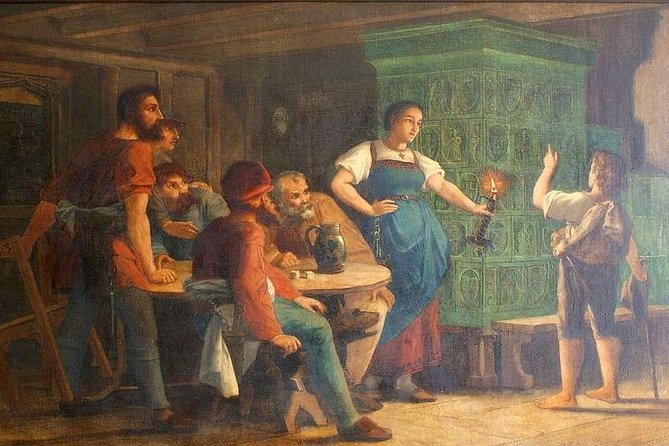
At the riverside square called Zöpfli, the topic turns fully to law and order. Projected paintings show methods of prosecution, interrogation, and corporal punishment in medieval Lucerne.
This is one of the most distinctive parts of the experience. Many city walks stop at grand buildings and repeat dates. Here, you get a picture of the systems behind those buildings, including what could happen when authorities suspected someone of wrongdoing.
The visual material helps, particularly in the evening when ordinary details of the city can be hard to see. Still, this is the point where the walk may feel too graphic for very young children. Children up to age 12 are free but must be with an adult, and parents should decide if medieval punishment fits their family’s evening plans.
Bridges, the Needle Dam, and the pharmacy window
After crossing Reussbrücke, you see Spreuerbrücke, also called the Mill Bridge, along with the Needle Dam and sections of the Musegg Wall. The tour does not linger at each one, but the sequence gives you a useful sense of how Lucerne’s river defenses, bridges, and walls fit together.
A few steps later comes the medieval pharmacy window of the Alte Suidtersche Apotheke. The nightwatchman explains the building and its location, adding another reminder that old Lucerne is full of working details hidden in plain sight.
This stop should appeal to anyone who enjoys small architectural features. The pharmacy window is less famous than Chapel Bridge, but it rewards close attention. You may want to bring a small flashlight for general walking comfort, though no special equipment is listed as necessary.
Ritterscher Palace and the Dance of Death
At Ritterscher Palace, the guide points out guardian demons and stops at the legendary house of Lux Ritter. You hear why the first two floors look different from the third, then meet the story of Hans von Trient, an unlucky stonemason.
The most striking presentation here is the Dance of Death. Seven paintings are projected onto a house wall while the guide explains their meaning. This is a smart use of the nighttime setting. You see art in the place where the story belongs, rather than being asked to imagine it from a paragraph.
The material links architecture, legend, labor, and death. It is also another reason to expect a little darkness in the tone. The guide’s approach is described as funny and personable in addition to informative, which helps keep the evening from becoming heavy, but the subject itself remains serious.
On the way, you pass the Church of the Jesuits, the first Baroque building in Switzerland, dating from 1677. It provides a later architectural contrast to the medieval streets and shows that the walk is not limited to one century.
Crossing Chapel Bridge to finish
The final section returns to Chapel Bridge. You cross it, see its paintings, and learn why the bridge was built diagonally across the river. The walk ends back at the starting point.
That return is convenient. You do not need to arrange transport from a distant neighborhood, and the bridge makes a memorable final scene. The full route takes about 90 minutes, with the stops generally lasting around 10 minutes each.
Because the experience takes place outdoors, dress for the forecast. It operates in rain, snow, or sunshine, so bring an umbrella or raincoat when needed. Most people can take part, service animals are allowed, and the meeting point is near public transportation.
What you get for $39.54
At $39.54 per person, the price is reasonable if you want a guided introduction to Lucerne’s old town rather than a simple stroll. You are paying for an English-speaking local guide, a period costume, visual presentations, projected historical images, postcards featuring old Lucerne, and a small fountain-water tasting.
The value improves if you are new to Lucerne or want context for places you have already seen. The guide connects the famous bridge and tower with less obvious stops such as Furrengasse, Brandgässli, the pharmacy window, and the old measuring tools at Kornmarkt.
The walk is less useful if you want entry to multiple interiors. Admission is not included at Peterskapelle, the Alte Suidtersche Apotheke, or Ritterscher Palace, though the information provided does not indicate that separate entry is part of the standard route. Most of the experience takes place outdoors and focuses on views, stories, and projections.
This activity is often booked well ahead, with an average booking time of 44 days in advance. That suggests you should reserve early if the evening fits tightly into your Lucerne plans, especially since the group limit is 15 people.
Who should book this night walk
I would choose this for anyone who likes city history delivered through stories, odd facts, and visual examples. It suits families with older children, couples looking for a different evening activity, and repeat visitors who want more than the usual Chapel Bridge photograph.
It also works well as an early orientation to the old town. You learn where key bridges, squares, churches, and walls sit, then can return during daylight for a closer look.
I would hesitate if you dislike theatrical guiding, medieval crime stories, or walking outdoors in uncertain weather. The route is not described as difficult, but one person found the pace slightly fast. Stay near the guide, wear comfortable shoes, and tell the guide if you need the group to slow down.
The tour is offered in English. It includes free cancellation up to 24 hours before the start time, while changes or cancellations inside that window are not accepted for a refund.
Should you book it?
Book this walk if you want Lucerne explained through its people and strange details, not just its postcard views. The Martiniplan, projected punishment scenes, old pharmacy window, fountain-water tasting, and Dance of Death presentation give the evening a clear identity.
Skip it if you want a quiet, purely architectural walk or prefer to explore at your own pace. For most visitors, though, the 90-minute route offers a good amount of history without taking over an entire evening. The strongest reason to book is simple: it makes familiar Lucerne sights feel less familiar, and that is exactly what a good city walk should do.
FAQ
How long is the Nightwatchman walk?
The tour lasts approximately 1 hour and 30 minutes.
Where does the tour start?
It starts at Rosengart Platz, 6004 Luzern, Switzerland.
Where does the tour end?
The activity ends back at the meeting point at Rosengart Platz.
Is the tour offered in English?
Yes. The experience is offered in English.
How large is the group?
The maximum group size is 15 people.
Are children allowed on the walk?
Yes. Children up to 12 years old are free, but they must be accompanied by an adult.
What happens if it rains or snows?
The tour operates in rain, snow, or sunshine. You should dress for the weather and bring an umbrella or raincoat when needed.
Recently added in Lucerne
- Private Transfer: Lucerne to Zurich Airport ZRH by Luxury Van★ 4.5 · 6 reviews
- Weggis Vitznau Foxtrail Helios★ 4.5 · 8 reviews
- Private Transfer: Lucerne to Zurich Airport ZRH by Business Car★ 5.0 · 11 reviews
- Touristic highlights of Lucerne on a Private half day tour with a local★ 4.0 · 5 reviews
- The Lives and Legends of Lucerne: A Self-Guided Audio Tour★ 5.0 · 6 reviews
- Paragliding Tandem in Switzerland★ 5.0 · 9 reviews
- Tandem Flight Zurich-Engelberg★ 5.0 · 7 reviews
- Private city tour in lucerne★ 5.0 · 4 reviews
Walking Tours, compared.

Zurich Walking Tour With Cruise and Aerial Cable Car
Read our review →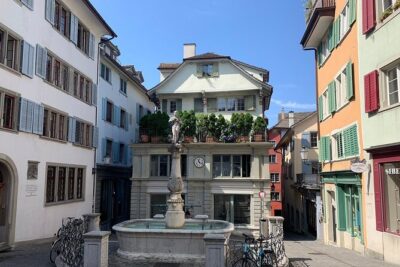
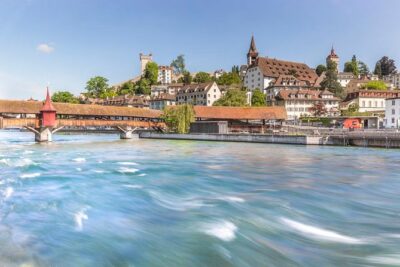
Lucerne Walking & Boat Tour: The Best Swiss Experience
Read our review →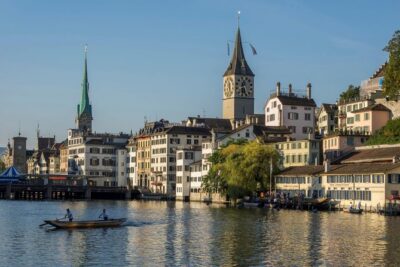
3 in 1: Zurich Walking Tour – Cruise on the Lake – Cable Car Ride to Felsenegg
Read our review →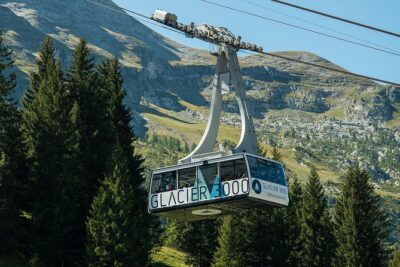
Glacier 3000 Ticket Including Cable Car and Peak Walk by Tissot
Read our review →
Bern Walking Tour: Explore Top Sights & Hidden Gems
Read our review →Browse the lists this tour appears in