
Reviewed · WALKING TOURS
Geneva Private Walking Tour with a Professional Guide
Geneva’s story comes into sharp focus on foot, especially around Saint Peter’s Cathedral, where Roman foundations, Calvinist reform, and centuries of civic life meet in one compact old quarter. This private walk takes you from the Flower Clock through the cathedral district, City Hall, Bourg-de-Four, and the Reformation Wall before ending at Place de Neuve.
I like the one-guide-for-your-group format, since you can ask about Calvin, photography, architecture, or modern Geneva without waiting for a large group to catch up. I also like the route’s variety: lakefront sights, steep old-town stairs, medieval squares, church history, cannons, and major cultural buildings all fit into two hours.
The main catch is the price: $421.03 per group is a serious charge for one or two people, though it can make good sense when divided among a larger group of up to 15. The walk also includes stairs, cobbles, and an uphill passage, so comfortable shoes matter.
Key points at a glance
- The Flower Clock begins the walk: Start beside Geneva’s famous floral timepiece in the English Garden, near the lakefront.
- Calvin shapes the route: Saint Peter’s Cathedral and the Reformation Wall give the tour a strong Protestant history focus.
- A private guide keeps the pace flexible: You can ask questions and request some customization during the walk.
- The old town is compact but hilly: Expect a long stairway passage, cobblestones, and walking between several historic districts.
- The finish is Geneva’s cultural center: Place de Neuve brings together the Grand Theatre, Conservatoire de Musique, and Musée Rath.
- The price favors groups: At $421.03 for up to 15 people, the per-person cost drops sharply as your party gets larger.
Starting beside Geneva’s Flower Clock
The meeting point is L’Horloge Fleurie, the Flower Clock, at Quai du Général-Guisan 28. It is an easy place to find near the English Garden and public transportation, and it gives you an immediate introduction to Geneva’s polished lakefront side.
The clock is more than a timekeeping novelty. Its changing floral display has become one of the city’s signature sights, and it works well as a fixed starting point for a walking tour. You do not need to spend much time here, but it is a useful first photograph and a clear landmark for meeting your guide.
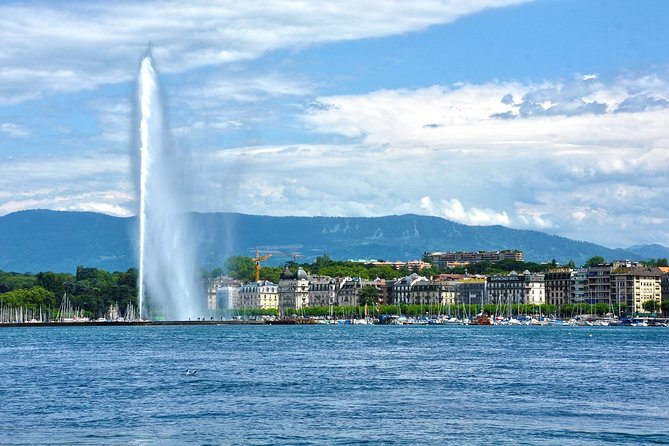
The English Garden also includes a sculpted bronze water fountain. These details help set up the larger story of Geneva, a city that mixes public parks, international importance, old religious conflicts, and everyday civic life in a fairly small area.
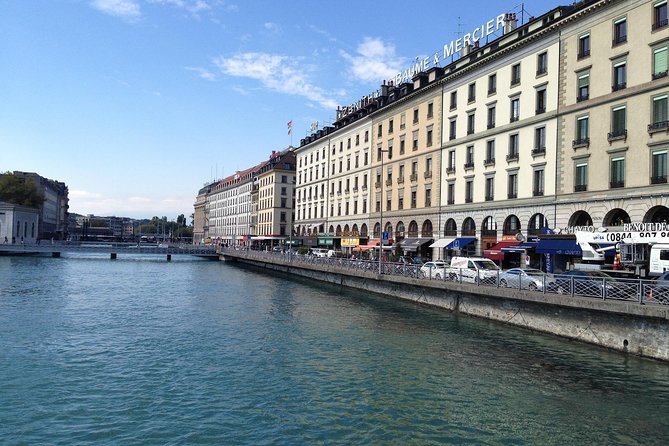
From here, the route turns toward the Old Town. That transition matters. You move from an open, modern-feeling waterfront setting into narrow streets and older buildings, with the city’s historic core rising ahead.
More walking tours in Geneva:
- Geneva Private Custom Walking Tour With A Guide (Private Tour)
★ 4.5 · 47 reviews - Geneva Scavenger Hunt and City Highlights Walking Activity
★ 4.5 · 14 reviews - Geneva Private Walking Tour with a Local
★ 4.5 · 13 reviews
Climbing toward Saint Peter’s Cathedral
The route uses a long stairway passage to reach the area behind Saint Peter’s Cathedral. This is where the tour becomes more physical and where good footwear pays off. You should expect an uphill walk rather than a flat stroll along the lake.
Saint Peter’s Cathedral is the key stop. The building occupies the site of an ancient Roman temple dating to the fourth century, and it later became closely tied to John Calvin and the Protestant Reformation in the 16th century. That makes the cathedral useful for understanding Geneva’s identity, not simply for admiring its architecture.
The building began in a Romanesque style with Gothic influence, but what you see today reflects several periods. I like this sort of layered architecture because it gives your guide something concrete to explain. You are not just hearing a list of dates. You can look at the structure and see how Geneva changed over time.
The Calvinist connection is a major reason to choose this tour over a basic city orientation. Several guide-led experiences on this route have placed strong attention on Calvin, the Protestant church in Geneva, and the way religious change affected Switzerland and the development of government among its cantons.
The cathedral stop may be especially useful if you enjoy history, religion, or European political development. If you mainly want scenic views and shopping, the historical discussion could feel heavier than expected. Ask your guide to balance the church history with architecture and city life if that better suits your group.
The tour information does not include entrance fees, so you should not assume every interior visit is covered in the price. The route does take you to the cathedral, but ask about any admission cost if entering a building is important to you.
Reading Geneva’s civic story at City Hall
After the cathedral, you continue to City Hall, a building with a cobbled ramp and cannons dating from the 16th and 17th centuries. It is a good reminder that Geneva’s history is not only religious. This was also a place of diplomacy, government, and civic decisions.
The cobbled ramp adds some character, but it is another surface where sturdy shoes help. The cannons provide an easy visual point for discussing Geneva’s defensive past without turning the tour into a lecture.
City Hall has witnessed important diplomatic events, so this stop broadens the tour’s focus. You begin with the city’s religious transformation, then see how Geneva’s political and civic role developed around it. That combination gives the walk more substance than a route built only around postcard sights.
Because this is a private tour, you can ask your guide to explain how local government worked, how the cantons fit into Switzerland, or how Geneva’s international role developed. The supplied information does not promise a fixed lecture on every topic, so your questions will help shape the experience.
Bourg-de-Four, from Roman forum to medieval square
Place du Bourg-de-Four is one of the most useful stops for seeing how Geneva was built in layers. It began as a Roman forum and later became a medieval town square. That change from Roman public space to medieval civic center is exactly the kind of detail that makes an old town walk click.
The square also contains the Palais de Justice. The building was completed in 1707, but it has served as a court of law only since 1860. Those dates offer a small but telling lesson: buildings often outlive their original purpose, while the city keeps adapting them to new needs.
I like this stop because it gives you a chance to pause and take in the shape of the Old Town. After the uphill section and cathedral discussion, a square provides a more relaxed setting for questions. If you are interested in photography, this is also one of the places where your guide can help point out appealing architectural angles and scenic details.
A private walk is particularly helpful here because you can ask what is Roman, what is medieval, and what belongs to later Geneva. Without explanation, an old square can look simply old. With context, its changing role becomes the point.
A few more Geneva trips worth comparing
- Award-Winning Geneva Chocolate &Old Town Tour with Boat Ride (3h)
★ 5.0 · 3,721 reviews - Chamonix & Mont Blanc Panoramic Sky-Glass Bus Guided Day Trip
★ 4.0 · 1,324 reviews - Annecy – Venice of the Alps – Tour from Geneva
★ 4.5 · 418 reviews - Best of Geneva City Tour with optional boat cruise
★ 4.0 · 416 reviews
The Reformation Wall and Geneva’s big religious argument
The route then descends toward Bastions Park and the Reformation Wall. The monument was built in 1917 along a 16th-century rampart beneath the Old Town, on the Promenade des Bastions. At 91 meters long, it is not a quick plaque or small memorial. It is a major statement about Geneva’s place in Protestant history.
The wall represents four Genevese reformers: John Knox, John Calvin, Théodore de Bèze, and Guillaume Farel. Your guide can connect these figures to the wider Protestant movement and explain why Geneva became such an important center for reform.
This is probably the strongest part of the walk for history fans. The cathedral introduces Calvin’s role, and the wall gives the movement a large public memorial. Together, the two stops help you understand why Calvin remains so important to Geneva’s character.
The subject can be serious, and the tour’s historical focus may not suit everyone equally. Families with children or mixed interests may want to tell the guide early on that they prefer a shorter religious explanation and more time for city views, architecture, or daily life. The private setup makes that request practical.
Bastions Park also changes the feel of the walk. After narrow streets and historic buildings, the open park offers room to breathe. You can take in the monument without being rushed by a large group, then continue toward the final stop.
Finishing at Place de Neuve
The walk ends at Place de Neuve, described as Geneva’s cultural heart. This is a strong finish because it moves the story from religion and government to music, theater, and the arts.
The Grand Theatre was built in 1879 and renovated after a fire in 1951. The Conservatoire de Musique and Musée Rath are also here. Even if you do not enter any of these institutions, their presence helps show another side of Geneva, one that is more cultural than political or ecclesiastical.
The stated end point is Geneva at a central meeting point, rather than a specific hotel or restaurant. One guide has been able to lead a group directly to a restaurant reservation, which shows how the private format can be useful at the end of the walk. Still, you should confirm your exact final location with the guide if you have a tight onward plan.
Place de Neuve is also a sensible place to continue exploring on your own. The tour does not include entrance fees, and its main purpose is an outdoor orientation, so plan separate time if you want to visit a museum, attend a performance, or explore more of the cultural district.
What the private format is worth
The advertised price is $421.03 per group of up to 15 people. For a solo visitor or couple, that is expensive for a two-hour walk. For a family, corporate group, or party of six to 15, the math becomes much more reasonable.
At the full group limit, the cost works out to about $28 per person. A group of five would pay roughly $84 per person, while two people would pay about $211 each. The exact value depends on how much you use the guide’s flexibility.
That flexibility is the main reason to choose this option. You can ask for more history, focus on photography, spend extra time around the lakefront and Old Town, or request modern cultural highlights such as the Flower Clock and shopping areas. The guide can also adjust the pace for a family with different ages.
Named guides associated with this experience include Darria, Olga, and Natalia. Darria has been praised for keeping a mixed-age family engaged in warm weather, while Olga has been especially good at tailoring a walk to history and photography interests. Natalia’s route has placed strong attention on churches, streets, and the Calvinist movement.
You are not guaranteed one of these specific guides unless the provider confirms it. Still, their different strengths suggest what this tour can do well: adapt the conversation to your group instead of delivering one fixed script.
Timing, comfort, and practical planning
The walk lasts about two hours. That is enough time for a clear Old Town orientation, but not enough for long interior visits or a slow look at every monument. Think of it as a focused introduction, not a full-day exploration.
Wear comfortable shoes. The route includes a long stairway, a downhill section, cobblestones, and regular walking between stops. Most people can participate, but the physical details matter if someone in your group has trouble with stairs or uneven surfaces.
The meeting point is near public transportation, and the Flower Clock is a recognizable place to begin. The mobile ticket makes it easy to keep confirmation on your phone. Confirmation arrives when you book, and the activity is private, with only your group taking part.
Gratuities and entrance fees are not included. Set aside extra money if you plan to enter a paid site, and tip your guide separately if the service meets your expectations.
You can cancel for a full refund up to 24 hours before the local start time. Changes or cancellations inside that 24-hour window are not accepted for a refund, so avoid booking a time that may conflict with a train, flight, or weather-sensitive plan.
Who will get the most from this Geneva walk
I would choose this tour if you have less than a day in Geneva and want a fast but meaningful orientation. One group with under 24 hours in town found the route gave them the essentials, and that is a fair description of its purpose.
It also suits families, first-time visitors, history fans, and people who want to ask plenty of questions. Photography-minded visitors can ask the guide to point out scenic spots, while architecture fans will find material in the cathedral, City Hall, Palais de Justice, and Place de Neuve.
It is less appealing if you want a flat, relaxed stroll or if you dislike religious and political history. The walk covers a lot in two hours, and the emphasis on Calvin and the Reformation may take up much of the conversation.
Should you book it?
Book this private Geneva walk if you value personal attention, have several people to share the cost, or need a strong introduction in a short visit. The route connects the Flower Clock, Old Town, Saint Peter’s Cathedral, City Hall, Bourg-de-Four, Bastions Park, the Reformation Wall, and Place de Neuve in a logical two-hour sweep.
For one or two people, compare the price carefully with a group tour or a self-guided walk. For a larger party, the cost becomes much easier to justify, especially if you want the guide to adjust the route around history, photography, family needs, or a restaurant reservation.
FAQ
How long does the Geneva private walking tour last?
The tour lasts approximately two hours.
How many people can join the private tour?
The price covers one private group of up to 15 people. Only your group participates.
Where does the tour begin?
It begins at L’Horloge Fleurie, the Flower Clock, at Quai du Général-Guisan 28, 1204 Genève, Switzerland.
Where does the tour end?
The tour ends in Geneva at a central meeting point. Confirm the precise final location with your guide if you need to connect to another booking.
Are entrance fees and gratuities included?
No. Entrance fees and gratuities are not included in the tour price.
Can I cancel for a full refund?
Yes. You can cancel at least 24 hours before the experience start time for a full refund. Cancellations or changes made less than 24 hours before the start time are not accepted for a refund.
Recently added in Geneva
- Swiss Vineyard Wine Tasting Tour in Vaud★ 5.0 · 5 reviews
- Old Town Geneva Private Walking Tour★ 4.5 · 4 reviews
- Six Hour Private Tour of The Swiss Riviera★ 5.0 · 11 reviews
- Geneva Highlights Tour by TaxiBike★ 5.0 · 6 reviews
- Private Trip from Geneva to Annecy in France★ 5.0 · 7 reviews
- Private Trip from Geneva to Swiss Riviera Montreux & Chamonix★ 3.5 · 6 reviews
- Self-Guided Audio Tour to the Many Faces of Geneva★ 4.5 · 10 reviews
- Private Transfer from Geneva City to Geneva Airport★ 5.0 · 4 reviews
Walking Tours, compared.

Zurich Walking Tour With Cruise and Aerial Cable Car
Read our review →
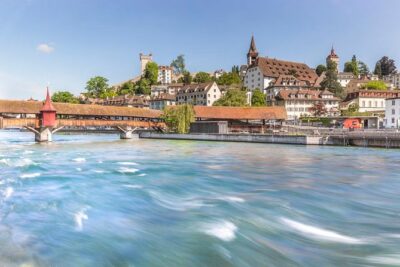
Lucerne Walking & Boat Tour: The Best Swiss Experience
Read our review →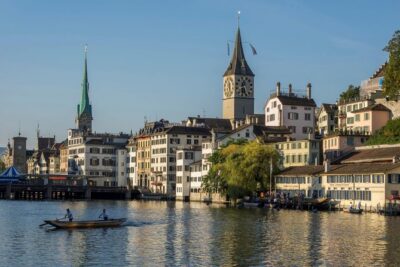
3 in 1: Zurich Walking Tour – Cruise on the Lake – Cable Car Ride to Felsenegg
Read our review →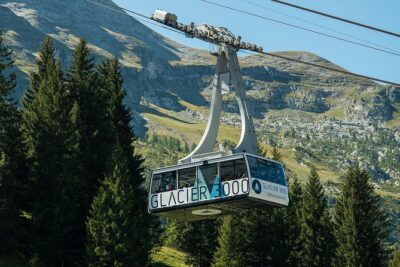
Glacier 3000 Ticket Including Cable Car and Peak Walk by Tissot
Read our review →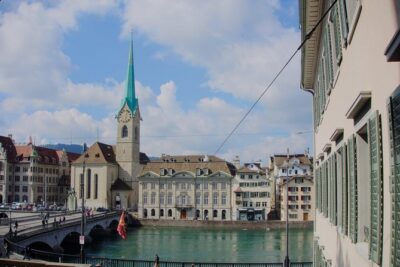
Bern Walking Tour: Explore Top Sights & Hidden Gems
Read our review →Browse the lists this tour appears in